
Fiere di Parma, record budget in 2025. Attendance up 30% at TuttoFood
The event saw 70 thousand buyers in the first two days, 18 thousand from abroad. The company reached a turnover of 55 million (+22%). Objective 65 million in 2026

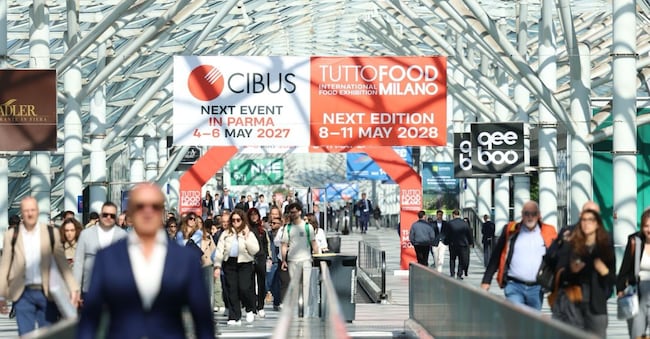
The final figures will only be announced this afternoon, but expectations, based on the trend of the first three days, are encouraging and speak of a growth of around 30% in attendance for Tuttofood, the event dedicated to the agro-food chain organised for the second year by Fiere di Parma, which last year closed with 95,000 visitors.
Inaugurated last Monday at the Fiera Milano exhibition centre in Rho, in the first two days the fair had already recorded 70,000 presences of industry, distribution and catering operators, importers and buyers from all over the world, with 18,000 arrivals from abroad, in particular from Europe (63%), Asia (18%) and the Americas (15%).
A bet won
A winning bet for the organisers, who believed in and invested in this event, with the aim of making it, together with Cibus, a point of reference in the international exhibition panorama dedicated to the world of food. All the more so considering the difficulties and uncertainties of the global geopolitical and economic context, characterised by the ongoing wars in Ukraine and Iran, US tariffs, pressure on energy costs, the volatility of raw materials and the redefinition of international supply chains.
In this scenario, the agri-food sector is confirmed as one of the most solid and dynamic in the Italian economy, with exports reaching 72.4 billion euro in 2025, up 4.9% compared to 2024, and a turnover of the Italian food industry that, according to Federalimentare, reached 204 billion euro last year, up 3.6% on the previous year.
The strength of Italia's food
"The significant increase in attendance at Tuttofood is not just a trade fair indicator, but an economic signal," explains Antonio Cellie, CEO of Fiere di Parma. "Food has confirmed itself as a sector capable of withstanding difficult times because it responds to basic needs and, at the same time, intercepts new global demands for quality, safety, health and territorial identity. This was confirmed by the many foreign buyers who attended the exhibition, especially those arriving from the United States, where tariffs (and therefore the increase in final prices) do not curb demand, because consumers are willing to pay more in order to have quality and certified products.

