
Pensions: Calderone says a pension fund for newborns is being considered
Durigon responds: “As the League, we are looking into the possibility of including in the budget a flexible retirement scheme that would allow workers, whilst retaining full freedom of choice, to retire at the age of 64.”

Key points
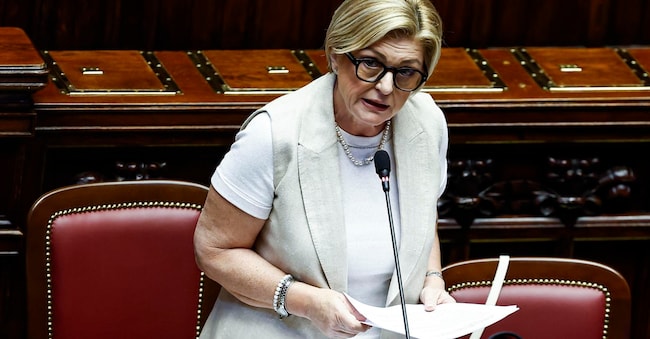
Following in the footsteps of INPS, COVIP and ANIA, the Minister for Labour, Marina Calderone, has also given the green light to the proposal for a pension fund set up at birth, initially funded by a public contribution and subsequently by contributions from family members and the beneficiary. “We are assessing the feasibility of the birth-based pension fund,” said the Minister for Labour in an interview with *Corriere della Sera*. “And the funding can be found without diverting resources from other schemes, especially as only small amounts are needed to get the birth-based pension fund off the ground.” In Germany, the government has just launched such a fund, providing for a monthly contribution of 10 euros.
Fava: ‘Calderone’s approval is good news’
“I am very pleased that the Minister for Labour has responded positively to my proposal for a third pillar” for social security “and has even confirmed that the INPS can act as both the implementing body and the managing body for this third pillar”. This is what Gabriele Fava, President of the National Social Security Institute (INPS), told ANSA at the Rimini Meeting. “It is a proposal that I put forward,” said Fava, “and it has also been taken up by other stakeholders. I hope to meet with the Minister and the other stakeholders very soon so that we can work together on implementing this proposal of mine.”
Tax exemption on renewals set to be extended
Calderone then reiterated the aim of ensuring that the employment package already included in the 2026 budget is confirmed in 2027: ‘In other words,’ he said, ‘this involves confirming the tax relief on contract renewals – and thus the preferential tax treatment – and investing in productivity-based contracts, whilst confirming the preferential tax rate of one per cent on amounts up to five thousand euros. This measure has yielded significant results. The number of contracts filed with the Ministry of Labour has increased by thousands, and the productivity bonuses granted by companies throughout 2026 have risen by an average of 500 euros per person” (obviously in those companies where second-level collective bargaining exists).
There will also be a focus on securing additional funding for training – both initial and continuing – linked to the ongoing transformations in the world of work. The main focus is on initiatives such as the New Skills Fund and the ITS Academies, which, in recent years and partly thanks to European funding, have delivered extremely significant results.
Durigon: the League is working on flexibility regarding retirement in the budget bill
Also speaking in an interview with ilSussidiario.net during the Rimini Meeting was the Under-Secretary of State for Labour, Claudio Durigon: ‘In the budget, as regards labour policy, I believe it would be important to retain the measures already adopted in recent years, in particular the tax exemption on pay rises resulting from collective agreement renewals. If possible, we will increase incentives for workplace welfare schemes – which in some cases amount to an additional salary – and we will seek to improve business efficiency, including through greater flexibility regarding retirement: I think it is unacceptable to have to work until the age of 67 at a time when we are discussing the implementation of artificial intelligence in businesses. As the Lega, we are examining the possibility of including in the budget a flexible retirement scheme that would allow workers, with full freedom of choice, to retire at 64.’

