
Perfect avatars are scary, the risk of Matrix syndrome
Polimi research reveals the effectiveness of virtual creatures as long as they are not perceived as infallible: being almost human in behaviour works, but in appearance creates rejection in consumers

4' min read
4' min read
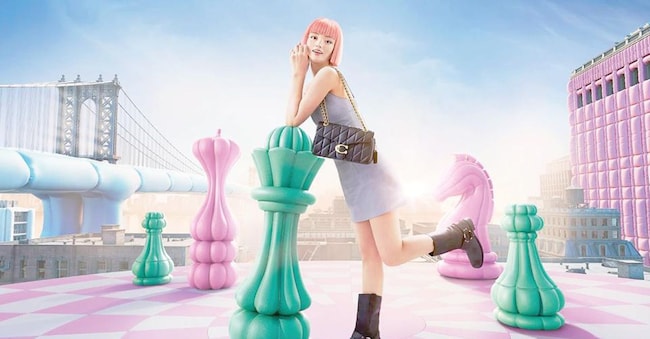
Out with the mere shopping of yesteryear for flesh-and-blood consumers only. Unbridled shopping also conquers the smartphone and the fashion of the moment is to dress one's avatar. So thought the American fashion giant Coach, born in a small family workshop in Manhattan in 1941 and now with a turnover of $5 billion. The 'Find Your Courage' campaign stars the virtual human Imma. The message calls for the courage to be real by crossing virtual worlds. The collection invites users to dress their avatars in the latest designs and has landed on Roblox and Zepeto.
Far from being a sporadic phenomenon. The Pandora's box now uncovered tells of an exponential growth of these non-real figures inhabiting screens and everyday life. The last two years have seen an explosion of avatars, with a projection of 270 billion dollars by 2030. A market that rewrites the rules of influencer marketing and is already worth $10 billion in America alone. However, Europe is not standing on the sidelines: already more than 60% of top European brands adopt virtual influencers in their campaigns.
The age of the avatar overturns storytelling and relationships. This is what emerges from the Reuters Institute report, which highlights the Matrix syndrome: more and more young people are using ChatGpt and other artificial intelligence systems to inform themselves, seeing the new technology as neutral and the world as a digital simulation. Meanwhile, this year Bmw launched a virtual avatar on its website to guide users in choosing models and financial plans and Nike integrated customisable avatars into the metaverse for virtual shopping.
Between man and machine
.But there is more. Today, these figures increasingly take the place of flesh-and-blood creators and become so human-like that they seem real. But when they are not in behaviour (even fallible behaviour) they can create disorientation. This is the uncanny valley phenomenon, a theory introduced by Masahiro Mori and describing the feeling of unease or revulsion that people experience when confronted with objects or entities that resemble humans but are not quite like them. "As robots become more like humans, they seem more familiar and acceptable to us. But the similarity causes disquiet, almost repulsion. It is the uncanny valley,' Mori wrote back in 1970.
"It is the paradox of resemblance: the more realistic an avatar is, the more uneasy it is in some cases when perceived as almost human. This is why a robot like R2-D2 from Star Wars does not disturb us, while the Visitors, humanoid reptiles that can pretend to be human, are scary. The principle also seems to apply in business: behaving almost like humans is perceived as progress, while wanting to appear human and be recognised as almost human creates rejection. Beware, however, that the uncanny valley is not a golden rule, but a tendency of a part of the population,' says Lucio Lamberti, Professor of Marketing at the Polimi School Of Management and Scientific Director of the Behavioral Research in Immersive Environment Lab at the Department of Engineering Management of the Politecnico di Milano.

