
Perla del Garda invests in wine in cans (popular in cocktails and abroad)
The winery led by Giovanna Prandini aims to increase the number of cans from 20,000 to 100,000 with the hope that the sustainability-conscious format may in the future be admitted into the specifications of the Brescia DOC wines

3' min read
3' min read
Use in mixology, minor alcohol content, attention to sustainability, decreasing quantities consumed and the consequent diffusion of small formats. These are some aspects that are changing the approach to wine consumption, especially among young people. And that go well with the spread of the can format: a market that is certainly still a niche, but one that could be destined for growth in the future precisely because of the trends underway.
Believing in this is, for example, Perla del Garda, a winery in Lonato led by Giovanna Prandini, which already produces 250 thousand bottles (between Garda, Valtenesi and Lugana Doc) on 45 hectares of vines for a turnover of about 2 million, growing by 300 thousand in 2023. 35% comes from exports, mainly to Germany.
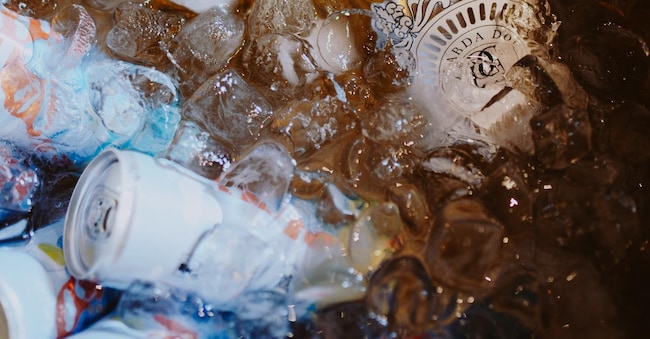
It is the first winery in the Brescia area to offer this format with a production of 20 thousand 25 cl cans of 'Perledellago', but the objective is to reach 100 thousand pieces (also introducing the 20 cl format for sparkling wine). It is probably no coincidence that the novelty arrives in an area characterised by important tourist flows: on the one hand, in fact, wine in cans is already much more widespread abroad than in Italy, and on the other hand, it is well suited to a cocktail offer that matches foreign demand.
In addition, Perledellago is a still white wine (11 degrees) made from Turbiana grapes, the same used for Lugana, one of the most popular doc wines (production has grown by 27% since 2019 to 28 million bottles).
"The aim is to reach a new segment of customers, the younger ones who are still struggling to relate to the world of wine," says Giovanna Prandini, "but who actually already consume it, for example, as an ingredient in mixology and who therefore have every right to know what they are drinking. Perledellago is a territorial, certified white, but not a denomination wine, as the Lugana specification does not currently contemplate this format. We conceived it as a tribute to the "pirlo", the classic Brescian aperitif that, according to the De.Co recipe, recently approved by the Municipality of Brescia, envisages the use of a still wine: in this case, a product with a low alcohol content, designed for a purely youthful public right from the packaging, studied and designed by my niece Alessia, with a 0.25 dosage that recalls the quartino consumed in the past in taverns in a mix of tradition and contemporaneity".
In short, the idea is to accept without snobbery the challenges posed by new targets entering the world of wine. "It will be one of the objectives of the future: here the can business is certainly still in its infancy, but elsewhere it already represents a response to consumption occasions that differ from the traditional ones,' emphasises Prandini. The hope is that the product can be included in the Garda Doc specification, but we believe that the small format and the aluminium packaging can already convey a new message of freshness, practicality and sustainability, given that the can is one hundred per cent recyclable.


