
'Pesticides, EU rules outdated by innovation, need to be changed'
Fedagripesca Confcooperative President Raffaele Drei at the opening of Fruit Logistica in Berlin: 'Today precision agriculture minimises the impact of chemicals'
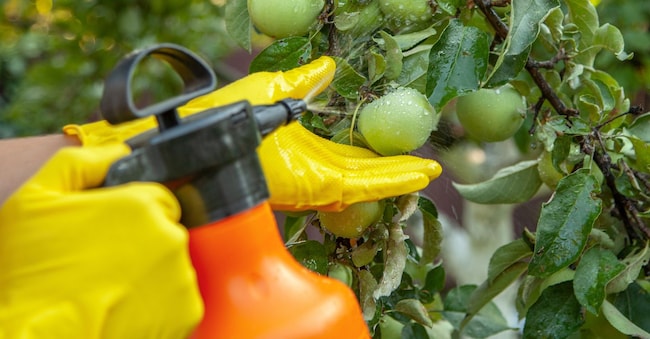
The Italian fruit and vegetable sector is in difficulty. Production and profitability are falling, penalised by climate change (which has seen an increase in extreme events) and the advent of alien insects and diseases that were unknown until recently. Not to mention the pressing competition from other areas of the world where technical means prohibited in Italia can be used.
This is the indictment launched by the president of FedagriPesca Confcooperative, Raffaele Drei on the occasion of Fruit Logistica, an event underway in Berlin that brings together the best of the world's fruit and vegetable sector and in which FedagriPesca takes part representing 500 cooperatives and 44 thousand producers. "Until ten years ago," explains Drei, "the Italia sector had a production potential of 26 million tonnes of fruit and vegetables. Today we are around 24.7 million after having dropped to 23 million in 2023'.
Pears (down from 764 thousand tonnes in 2015 to 293 thousand today), kiwifruit (from 575 thousand tonnes to 347 thousand), peaches and nectarines (from 1.4 million tonnes to 884 thousand) and cherries (from 110 thousand to 87 thousand) were among the most penalised segments. Among the factors behind the sharp drop in production was also the introduction of 'green' policies that limited or eliminated the use of various pesticides. Today in Italia," Fedagri-Confcooperative explain, "there are around 300 active substances compared to over a thousand in the 1990s. This has meant a loss of means of defence for producers without the introduction of effective alternatives.
"We ask Brussels for two things," added Drei. "On the one hand, we want reassurances on EU agricultural policy and the permanence of a common market organisation (CMO) dedicated to fruit and vegetables. A system that has favoured an important process of aggregation in the sector. Another aspect is the need for a change of pace on the issue of phytosanitary control'. And on this front too, according to the president of FedagriPesca-Confcooperative, action must be taken at several levels. "reciprocity is a beautiful word and a principle to be defended in international agreements," continued Drei, "but it must also be defended in Europe, where conditions of competitive parity are often not ensured.
The reference is mainly to 'dormancy switches' that promote the vegetative recovery of plants. Products whose use is banned in Italia but allowed in Greece, an EU partner and one of our main competitors in the fruit and vegetable sector.


