
Ghost bank uncovered in Prato: 100 million euros in drugs and goods moved
An illegal “credit institution” serving the clans of the Sacra Corona Unita, the ’Ndrangheta and the Camorra, as well as Albanian criminal gangs
Key points
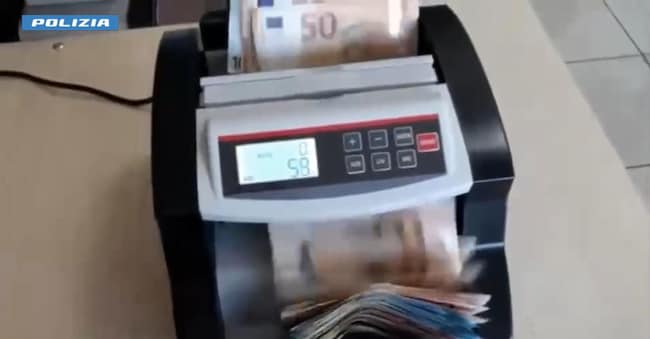
Hidden away in the heart of Prato’s industrial district was an illegal, clandestine, ghost bank serving the clans of the Sacra Corona Unita, the ’Ndrangheta and the Camorra, as well as Albanian criminal gangs. A ‘credit institution’ capable of handling up to 100 million euros a year in undeclared payments for consignments of drugs and textiles between Chinese companies. Money that flowed between Italia and foreign countries. The investigations led by the Florence Anti-Mafia Directorate (DDA), headed by Prosecutor Rosa Volpe and carried out by the Central Operational Service of the Police and the Prato Mobile Squad, resulted in 41 precautionary measures being imposed (17 in prison, 16 under house arrest and eight required to report to the judicial police). There are 57 suspects. They are (predominantly) Chinese, Italian and Albanian.
The organisation
Investigating magistrate Antonio Pezzuti has ordered a large-scale preventive seizure aimed at confiscating assets worth approximately €60 million. The alleged offences include criminal association with the aggravating circumstance of mafia involvement for having aided the Briganti clan of Lecce, the Fiarè ’ndrina, Razionale, Gasparro of San Gregorio d’Ippona (Vibo Valentia) and the Aquino-Annunziata clan from Campania. An organisation dedicated to money laundering, the reinvestment of illicit proceeds from drug dealing, illegal banking activities, drug trafficking and illegal immigration. At the head of the illegal bank, according to investigators, was a 50-year-old Chinese man with numerous previous convictions, accused of participating in a criminal organisation involved in drug trafficking in Veneto.
The operating mechanism
To pay for drug shipments and the ‘under-the-counter’ trade in textiles between Chinese companies, the ‘bank’ used the Islamic transaction system hawala, known in China as a ‘chop-shop’ (flying money), which cannot be traced. It is based on trust between intermediaries. A virtual mechanism, also used by Italian and Albanian clans, which allows money to be transferred ‘virtually’ without physically moving cash from the sender to the recipient, from one country to another. But it relies on a dense network of couriers and collectors of dirty money, who, travelling between Italia and abroad – Spain, France and Portugal – carried out cross-border payments by drawing on the proceeds of illicit trafficking. To prevent drug money from circulating – at the risk of seizure during police checks in various countries – transactions were carried out using funds generated from the cash flows (all ‘under the table’) of Chinese fast-fashion textile companies, based on the existing relationships between the industries in Prato – Europe’s leading textile district – and the production hubs on the Iberian Peninsula (ready-to-wear firms in Madrid, Málaga, Valencia and Seville).
The public prosecutor’s office has uncovered a close business link between the organisation’s leadership – which operated as a broker – and Albanian groups in need of laundering the proceeds of drug trafficking, who were its “clients”. Furthermore, the alleged head of the shell bank is charged, along with five other suspects, with facilitating illegal immigration for having smuggled Chinese migrants into Italia in July 2023. One case involved five Asian nationals who had to pay €9,500. After landing by plane in Serbia – a country that does not belong to the Schengen area and does not require an entry visa for those coming from China – are said to have stayed in Belgrade in a B&B under Chinese control, before being taken to Italia via an indirect route, passing through Hungary and Slovenia. Their final destinations were Prato, Turin and Sommacampagna (Verona).

