
Pirelli Calendar 2027: a look at India and the future
The Pirelli Calendar pays tribute to a country undergoing rapid change with photographs by Raghu Rai, Avani Rai and Sølve Sundsbø

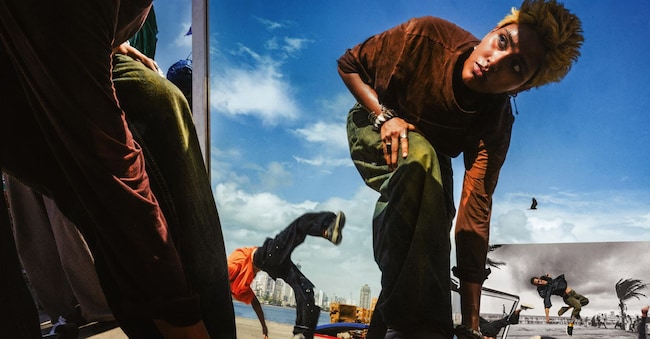
The 2027 Pirelli Calendar pays tribute to India through the work of three leading photographers. For the first time in its history, the iconic ‘The Cal’, unveiled on Friday 23 October in the heart of New Delhi, was produced simultaneously by Sølve Sundsbø, who previously created the 2026 Pirelli Calendar, the Indian master photographer Raghu Rai – who passed away shortly after the project began – and his daughter Avani Rai, who was called upon to complete her father’s work.
At the heart of it all is a country – India, to be precise – portrayed through their lenses: on the one hand, the distinctive aesthetic and fashion-inspired approach of the Norwegian artist; on the other, the vision of India cultivated throughout his life by the Indian master and reinterpreted in a more contemporary light under the guidance of his daughter. What emerges is a portrait of a country characterised by millennia-old traditions, yet one that is rapidly evolving.
“India represents a quiet force that is moving forward with its sights set on the future. It is experiencing extraordinary growth, but it also has complex regulations because it is a country full of nuances. All of this allows us to look towards a future that is yet to be explored,” explains Marco Tronchetti Provera, Executive Chairman of Pirelli.
The shoot takes place across Rajasthan, Jaipur and New Delhi, and the undisputed stars of the 2027 Pirelli Calendar are the colours and ordinary people. The people, photographed on the streets and at iconic sites of Indian culture, take centre stage, alternating with muses such as Padma Lakshmi, Rupi Kaur, Bhavitha Mandava, Lakshmi Menon, Freida Pinto, Aditi Rao Hydari, Anouska Shankar, Avantika Vandanapu and Avani Rai, who takes on the dual role of model and director.
Thus, throughout the twelve months of the Calendar, different perspectives coexist – physically separated, too, between the work of Avani Rai and that of Sølve Sundsbø – yet they are inseparable and, in some cases, overlap, whilst the roles and identities of the three artists remain clearly distinct. The story behind this Calendar reveals just to what extent this is the case.


