

The researcher from Pisa at Karolinska in Stockholm who on Instagram helps young brains take their first steps
Chiara Tremolanti is working on new therapies for Parkinson's disease: her profile aims to normalise the frustration of young people in the lab and targets aspiring PhD students

Key points
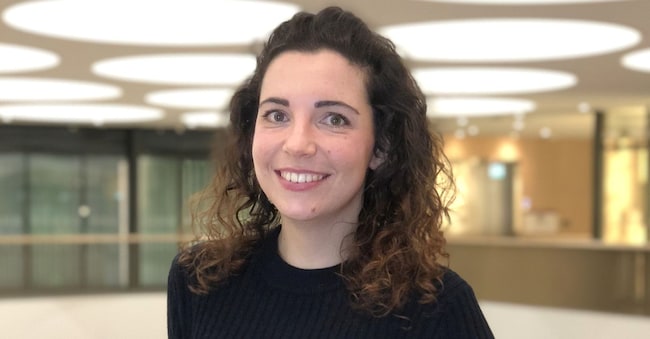
"Good morning, tribe!" is how Chiara Tremolanti, 31, in her fourth year as a postdoc at the Karolinska Institute in Stockholm, often opens her stories. Originally from Pisa, she is working on new therapies for Parkinson's disease based on replacing damaged nerve cells. On Instagram, she is @the_PhD_Tribe, a profile created to normalise the frustration of young people in the lab and is aimed at aspiring Italian PhD students, postdocs and neo-docs. And from the increasingly numerous messages and comments he receives, Tremolanti has realised something simple but decisive: with @the_PhD_Tribe he has filled a void. "I realised that there was a lack of a voice that spoke objectively about the PhD: what it means to design and report experiments, how to write a paper, what the day-to-day difficulties are, how to choose a lab, how to decide in which foreign country to pursue one's research. The feedback confirmed to me that people wanted just that - a practical, non-idealised narrative'.
L'obiettivo? To explain how to take the first steps in a laboratory
Because during the first steps into a laboratory it is not clear to a new PhD student what it really means to do research. You think you want to make discoveries, but then you come up against reality, which is difficult. The first reaction for many is doubt: I am not good enough, maybe the problem is me, maybe I am not cut out. "Seeing me normalising these things, they realise they are not alone. I try to listen to understand other people's problems and help them recognise them,' he explains. Tremolanti says she has always done things outside of her research life, fascinated by the people factor in academia, "I have always enjoyed mentoring and getting involved in associations, retreats and events: any opportunity for extras I have sought out". The idea of @the_PhD_Tribe was therefore a mix: a passion for science, an interest in the human aspect of academia and a desire to think about how to make research and life in the lab work better. "I had the comparison in front of me. PhD students in Sweden are more supported, more protected, they are valued throughout their career. There is frustration here too, but there is a more solid infrastructure - courses, internships, events, associations. Italian PhD students are often more alone'. According to Tremolanti, in Italy the vision of the doctorate is archaic; it is thought that the doctoral student is a closed specialist, a fish out of water in the real world. 'This is not the case,' he says, the doctorate develops transversal skills - communication, problem solving, critical thinking, resilience and adaptability - and, above all, the ability to learn quickly, which is fundamental in today's working world.
A growing community and lots of practical information
"Part of my message is to give awareness of what it is all about, what you are up against. I speak honestly and objectively, without demonising or painting everything as rosy. For some people a doctorate is a road, for others it is not. I reason with them,' says Tremolanti. His day as a content creator is minimalist; he has no special equipment. He tries to make it as efficient as possible: the stories are simple, the message counts more than the form. "I share my experiments as I prepare reagents, work with cells, walk to the microscope. I ask the community what they think. The community is growing and there is also a lot of personal exchange. Many write to me asking for practical help: I would like to do a PhD abroad, how do I go about it?, I am obliged to do a period abroad, how do I look for it? I have started doing ad personam mentoring: I look at CVs, cover letters, help with organisation. It's becoming a challenging project in parallel with my research, but I do it willingly, it's part of me'. Tremolanti is not fatalistic, he wants to act on the room for improvement. 'Many things in the Italian academy are impossible to change. For example, we cannot control the funds allocated to research - salaries are always too low - but we can promote a different mentality from below, so that we can change the way we live. They often write to me: I would like to do a doctorate, but everyone advises against it, they say it is useless. I urge them to recognise their skills and not to fall into the narrative of self-pity: it leads nowhere. What is needed instead is what I call an active embrace: conscious young researchers taking small steps, taking action instead of complaining. With a practical faith in the power of the community and in the possibility of changing the academy starting with the people who live it every day'.
Hope to inspire young girls to choose science
Looking to the future, Tremolanti's idea is to stay in research and academia with the aim of improving it and for @the_PhD_Tribe she dreams of a more interactive platform that connects people. Thinking big, she would like to organise events and collaborate with Italian universities. In the future, she would also like to be a spokesperson for young female researchers in STEM - to inspire girls to choose this path, also by speaking in schools. "We are already witnessing a change: a recent American study shows that today 34 per cent of children draw scientists as women - it was 1 per cent a few decades ago - but there is still a long way to go: men remain clearly predominant in academic leadership positions". And who knows: maybe these reflections will become a podcast, a space to deepen and interview PhDs about their path and career choices.

