
Plant alternatives to animal protein could replace 13% of meat in 2040
Systemiq analysis and The Good Food Institute Europe: new product growth opportunities for agriculture
by Maria Teresa Manuelli
 Aggiungi Il Sole 24 Ore
ai preferiti su Google
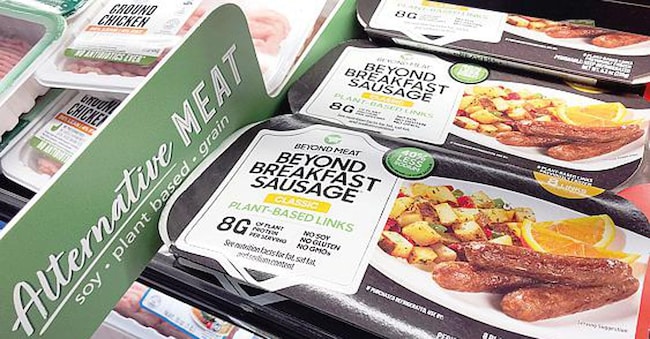
Ten billion euro of added value by 2040 and over 31 thousand jobs. These are the numbers with which Systemiq, an international consultancy firm, quantifies the economic potential of alternative proteins for Italia, according to the analysis developed with the support of the think tank The Good Food Institute Europe. In a scenario that the researchers define as 'moderate ambition', the market in Italy for alternative protein-based end products alone could reach approximately 6 billion euro by 2040, to which another 4 billion would be added from the supply chain. This modelling assumes specific conditions: 'technological advances, cost reductions, a predictable regulatory framework and steady public and private investment,' explain Systemiq. In this context, alternative proteins would partially replace animal products: around 13% of meat consumption, 8% of fish consumption, 25% of dairy products and 8% of eggs.
The sector - plant-based products, cultured meat (if it will be marketed in the future, ed.) and fermentation ingredients - is a possible answer to pressing challenges: GFI estimates that global demand for meat will grow by 50 per cent by 2050 and that alternative proteins can reduce land use by up to 90 per cent and cut emissions compared to traditional systems.
"Italia starts from a privileged position: European primacy of researchers in the field, a strong agri-food tradition and consumers attentive to sustainability," says Rupert Simons, partner of Systemiq. Today, retail sales of plant-based products in Italia amount to just over EUR 600 million, according to Circana, with a growth of 7.6% in the last year. Reaching the projected 6 billion by 2040 would require significant acceleration, especially considering the unknowns associated with cultured meat and precision fermentation products.
There is, however, a difficult knot to unravel: although Italia is the second largest producer of chickpeas in the EU and is responsible for 36% of European soya production, the country remains highly dependent on foreign countries: in 2023 around 70% of soya was imported. A figure that underlines the need to strengthen national protein autonomy, with Italian agriculture playing a central role. Protein diversification could double the demand for legumes. For Italia, this scenario represents an opportunity to valorise national arable land, promoting legumes and protein crops for human consumption. 'The vegetable protein sector is strategic, but the conditions must be created to develop a competitive supply chain, investing in agricultural research and innovation,' comments Deborah Piovan, president of the National Federation of Proteoleaginous Proteins of Confagricoltura.
Systemiq and Gfi's analysis is part of a broader European framework: by 2040 the sector could generate 111 billion added value in Europe and around 400,000 jobs. Achieving these results would require sustained investment in production scalability. The study estimates an average annual requirement of around EUR 2.6 billion for Italia over the next 15 years (700 million public, 1.9 billion private). "In the European context, this level," emphasise Systemiq, "is not unrealistic: in 2021 batteries received almost 3 billion through a single initiative, 3.3 billion was earmarked for semiconductors, while in 2022 two programmes mobilised 10.6 billion for green hydrogen. The assumed investment in alternative proteins is significant, but in line with what the EU has already done for other strategic industrial sectors. An ambitious challenge that, for Italia, is worth ten billion'.

