
Plastic and the ocean: 45,000 kilos of waste collected in June
This is the result of Ogyre’s Ocean Challenge, which involves fishermen and local communities in cleaning up plastic from the seas

Key points
Almost 45,000 kilos of marine and coastal litter collected in June. This is the initial tally from Ogyre’s Ocean Challenge, the collective initiative launched for Ocean Month by the global Fishing for Litter platform, which involves fishermen and local communities in cleaning up the seas of plastic . According to United Nations data, the ocean produces at least 50 per cent of the planet’s oxygen and is the main source of protein for over three billion people worldwide.
The
networkOgyre’s international network currently operates in Brazil, Indonesia, Senegal and Italia. In June, of the 45,000 kilograms of marine and coastal waste collected, 40,000 kilograms were recycled, preventing the emission of over 50,000 kilograms of CO₂ and generating over 4,400 kWh of energy from non-recyclable waste.
For example, the waste collection initiative in Indonesia, in the Batu Lumbang mangrove forest in Bali, has helped to increase fishing capacity by 50 per cent and has expanded the area of preserved mangroves by 85,000 square metres. In doing so, it has been possible to strengthen one of the most powerful natural allies against biodiversity loss and coastal degradation. Indeed, it is the mangroves themselves that trap, amongst their roots, many pollutants carried by river runoff into the sea, particularly during the rainy season.
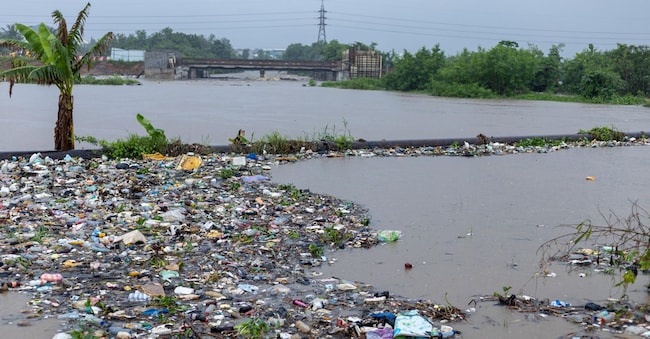
In Brazil too, in Guanabara Bay, Ogyre’s CEO and co-founder, Antonio Augeri, explained that ‘various types of waste are carried by the rivers and, as is also the case in Indonesia, accumulate amongst the roots of the mangroves, which, as the tides ebb and flow, become veritable landfill islands’. On the northern and southern coasts of Dakar, in Senegal, the presence of waste is linked to a combination of ocean currents, coastal dynamics and inefficiencies in the local waste management system.
“Even in these contexts, we work with fishermen to identify and remove waste,” concluded Augeri. “It is often degraded plastic and bulky materials, which make operations slower and more technically challenging. The difficulty of carrying out these operations is further compounded by the variability of weather and sea conditions, which limits the operational windows and requires highly adaptive planning.”

