
Plastic recycling: Italian firms forecast a 1.1% decline in revenue by 2025
Volumes are up (+2%) but margins have almost disappeared for companies in the sector: the Plastic Consult report for Assorimap

Key points
Turnover for mechanical plastic recycling companies has fallen for the third consecutive year, standing at €685 million (-1.1% compared to 2024), whilst volumes have seen a slight increase (850,000 tonnes, +2%). The second half of 2025 has been particularly challenging, with prices for recycled materials falling to their lowest levels in a decade and operating costs at their highest. This combination has squeezed profit margins to almost zero for the majority of polymers.
This is the picture of a sector in structural crisis painted by the 2025 report on the mechanical recycling of plastics, compiled by Plastic Consult for Assorimap – the national association of plastics recyclers and regenerators – and presented on 11 June at the Plast trade fair.
Profits wiped out
The trend in volumes, which runs counter to that of turnover, is not enough on its own to keep a sector healthy when it is under pressure from multiple fronts, a situation exacerbated by energy costs that soared to 135 per MWh in December: over 40% higher than in 2021. It is against this backdrop that Walter Regis, president of Assorimap-Confimi, describes a market that is not functioning: ‘Profits have been wiped out for all companies; those that combine recycling with other activities such as collection, sorting and diversified segments are holding on. But the problem goes beyond company balance sheets: mechanical recycling is the final link in the separate collection chain and a concrete lever for reducing the national contribution to the European Plastic Tax. Weakening it means weakening the entire system.”
The Pet Exception
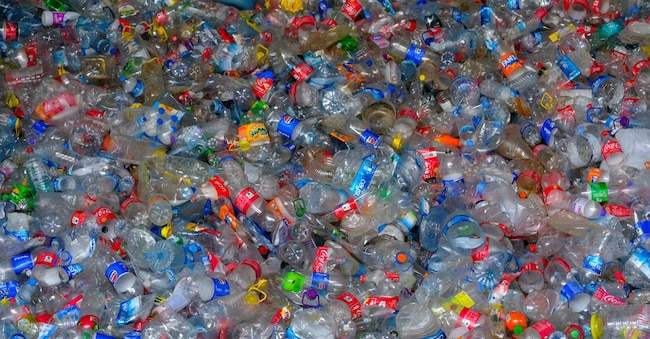
The only exception in a sector where values continue to fall is recycled PET (R-PET), which has exceeded 228,000 tonnes and, for the first time, has become the sector’s highest-turnover segment (€272 million, +8.8%), ahead of polyethylene. “PET is a special case because it is driven by the European SUP Directive, which imposes obligations on the recycled content of beverage bottles,” comments Paolo Arcelli, director of Plastic Consult. “For other polymers, led by flexible and rigid polyethylene, the requirements will not come into force until 2030. And indeed, the unfair competition from these materials passed off as recycled is aggressive.”
However, the growth of R-PET must also be monitored, as Arcelli warns: ‘The European Commission has indicated that, for reporting purposes, only post-consumer recycled materials produced in Europe will count. This is a factor that will shift the market balance in 2026–27.’


