
Meat, milk, oysters and organic: how VAT may change with the manoeuvre
Political forces in short order on rate cuts, exemptions and tax breaks applied to goods and services. But there remains very little chance of success for senators

Key points
The government has not yet got to grips with it so that VAT to all intents and purposes remains to this day the real unfinished business of tax reform. The high costs and resources that this tax requires to be revised and corrected has blocked every attempt at revision, and not only by the Meloni government but also by previous executives. In spite of this, however, Parliament is not giving up and with the Budget Law for 2026 is also going on the assault on the Goods and Services Tax. And it is a pressing that involves the entire political forces of majority and opposition. And so it happens that in the maxi-folder of the 5742 amendments (a number close to the record of more than six thousand corrective amendments presented at the start of the legislature) there are various requests for changes that aim to modify, rates, exemption regimes or facilitated regimes.
From pork to oysters
Foodstuffs remain the most popular of the requests presented by senators this year. Such as that of Raffaella Paita of Italia Viva, who calls for the application of the reduced rate of 4% to fresh, chilled or frozen pork and delicatessen products falling under CN codes 0203 to 0210 of the European Union's Combined Nomenclature. A rate cut of six percentage points costing the state coffers no less than EUR 900 million, according to the estimate presented with the same corrective to the manoeuvre.
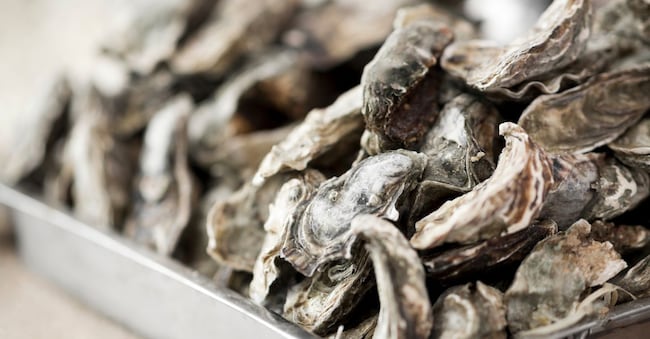
Oysters, which in the past have held court, not so much at the bouvette, but always in the Budget Committee chamber when an attempt was made to have them included with a product to which subsidised VAT at 10 per cent could be applied, are back in the Senate's spotlight. Now Forza Italia is trying again with a corrective by Claudio Lotito, who is asking to delete from Table III annexed to the 'VAT law' the exclusion of the delicious seafood from the application of the 10 per cent subsidised VAT.
The Five Star Revolution on basic necessities
From the Five Star Movement with Mario Turco comes the proposal for a real revolution on basic necessities, which today almost all discount the ultra-soft rate of 4%. The idea is to completely zero VAT on goods such as: pasta, bread and other ordinary bakery products also containing ingredients and with no added sugar, honey, eggs or cheese; flour, semolina and potato flakes; fresh milk, preserved milk, intended for food consumption, packaged for retail sale, subjected to pasteurisation or other treatments required by health laws; butter, cheese and dairy products; eggs of birds in shell, fresh or preserved; edible fruit, fresh or dried, or temporarily preserved grain legumes, dried, shelled, whether or not skinned or broken; 7) cereals (excluding husked, polished, glazed and broken rice); olive oil, vegetable oils intended for human or animal consumption, including crude oils intended directly for refining for food use; edible vegetables and plants, excluding truffles, fresh, chilled or presented immersed in salted, sulphurised or other water to ensure temporary preservation, but not especially prepared for immediate consumption. A very long list that, however, presents on the other hand costs estimated at 1.5 billion and therefore unbearable for the current public finance balances.
Other requests, certified organic products, over-the-counter medicines and reconditioned furniture
From the Green and Left Alliance it is Tino Magni who calls for the introduction, on an experimental basis to reduce the selling price, of the 4% VAT rate also for certified organic food and products that comply with the provisions of Regulation (EU) 2018/848. But even in this case it is an ultra-billion (1.350 billion) request from the oppositions and as such destined to be nipped in the bud so as not to have the 2026 manoeuvre balance the books. While the five stars ask for a three-year 10% tax rate on over-the-counter medicines. On the other hand, from the majority, and again with Lotito, comes the request for VAT at 10% on the supply of reconditioned furnishings and furniture, resulting from recovery, repair or regeneration processes aimed at their reuse, carried out by VAT taxable persons in the exercise of their business, art or profession. An operation, this one, estimated by the Lazio patron at EUR 40 million.

