
Porsche, profits and margins down. CEO Blume: 'The challenge is in China'.
The German manufacturer will rethink its budget due to the slowdown in demand for battery-powered vehicles. Signs of improvement in the second quarter

3' min read
Le ultime da Radiocor
Borsa: agosto magro per Milano (+0,9%), ma riscossa di oro (+12%) e bitcoin (+24%)
### Tlc: si apre nuova partita su frequenze, interessa soprattutto operatori Fwa -FOCUS
***Edison: Qatarenergy estende forza maggiore ad altri 5 carichi Gnl
3' min read
A significantly weaker half-year for Porsche compared to a year earlier, with revenues at EUR 19.46 billion versus EUR 20.43 billion (-4.8%), operating profit at EUR 3.06 billion versus EUR 3.86 billion (-20.5%), operating margin at 15.7% versus 18.9% and deliveries also down 6.8% (155,945 versus 167,354). However, the second quarter saw an improvement in sales, operating profit and margins. The return on sales for the second quarter, at 17.0%, was at the high end of expectations.
This comes a day after the company cut its forecast for the rest of the year due to a shortage in the supply chain that is estimated to reduce production by more than 10,000 cars. The shares gained 2 percent to 70 euros, partly recovering losses of 5.09 percent on Tuesday after the impact of the aluminium shortage was disclosed. Porsche said the reduction in supplies will affect production of all its models and could lead to the closure of another series of vehicles.
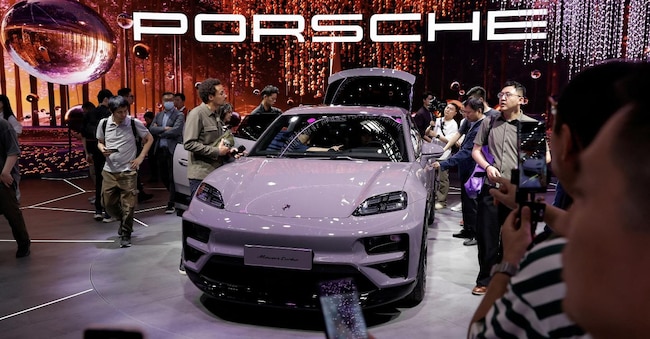
The shares of Porsche, a subsidiary of the Volkswagen Group that went public just under two years ago, slipped from the year's highs reached last April due to a series of software problems, delays in the launch of new models, and a sharp weakening of deliveries in China (-33% in the half-year).
The biggest challenge, admitted the CEO Oliver Blume, today will be in the Chinese market, where volumes are in sharp decline. The company is, however, tackling the cost structure and there is confidence that profitability can return to 17-19% overall by 2025. Severe supply problems with aluminium alloys due to the floods that hit a supplier's facilities in late June should be rectified in no time, according to Blume. For Porsche, which has a high percentage of cars on pre-order, 'it is more complex to change suppliers in case of unexpected events'.
One important piece of news was announced by Lutz Meschke, Porsche's chief financial officer: the carmaker will rethink its product mix due to slowing demand for electric vehicles in Europe and the Chinese luxury market. "In connection with the slowdown in battery car (Bev) adoption in the Western world and the modest luxury demand in China, we will refocus and recalibrate our budget," Meschke said.

