Automotive

Porsche’s crisis deepens: sales at their lowest since 2020

Deliveries plummeted by 16 per cent in the first half of the year. The German carmaker is facing weak demand, the end of key models and local competition in China. It is now embarking on a restructuring programme to restore profitability

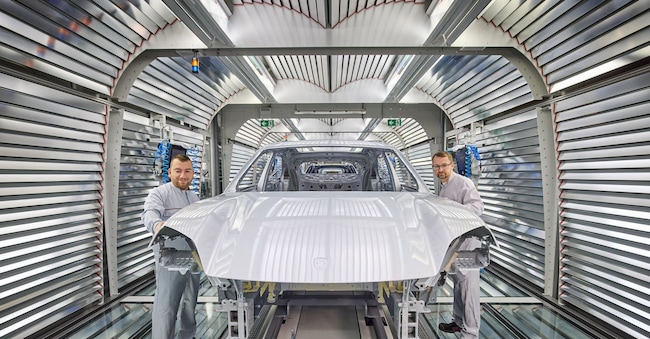
Reparto verniciatura Porsche Porsche AG / Marco Prosch

3' min read

Translated by AI
Versione italiana

3' min read

Translated by AI
Versione italiana

Porsche’s deliveries fell by 16 per cent in the first half of the year, dragged down by weak demand in its main market, North America, and a drop of almost a third in China, further highlighting the gloom surrounding the German automotive sector.

Sales fell to 122,306 units in the period from January to June, the German manufacturer said, the lowest level since 2020. The company recorded a fall in deliveries across all regions, with North America down 13 per cent and China down 32 per cent.

Loading...

Sales at their lowest since 2020

Porsche stated that the main reasons for the overall decline include the end of production of the combustion-engine 718 model, last year’s strong demand for the all-electric Macan, and the expiry of US tax incentives for electric and hybrid vehicles.

The decline is most pronounced in China, where a property crisis and tougher local competition are dampening demand for high-end vehicles from Mercedes-Benz, BMW and Porsche. Porsche has scaled back its dealer network in the country and is working to offer in-car software that is better suited to local tastes. The manufacturer of the 911 sports car expects its sales in that market to fall for the fifth consecutive year in 2026.

Porsche shares fell by as much as 2.1 per cent in Frankfurt. They have shown little movement this year, as investors have already factored in the downturn in China that has been ongoing for several years. The share price also tends to fluctuate less than that of some of its competitors because Volkswagen still owns more than three-quarters of Porsche following the sports car manufacturer’s initial public offering in 2022, resulting in a small free float.

Profitability issues

Chief Executive Michael Leiters, who took the helm in January after years spent managing Ferrari’s manufacturing operations, is seeking to restore Porsche’s profitability following a difficult year that exposed the limitations of its electric vehicle strategy and caused the company’s shares to fall out of the German benchmark DAX index. The car manufacturer has also been hit hard by President Donald Trump’s tariffs on imports, as it does not have a factory in the key US market.

Leiters has begun restructuring the company, agreeing in April to sell Porsche’s stake in the joint venture that owns the Bugatti brand. The management has indicated that further divestments of business units are possible with a view to sharpening its focus and boosting returns.

The crisis in the German automotive industry

Porsche’s difficulties are part of a wider slowdown affecting German luxury car manufacturers. Mercedes announced on Wednesday that its car deliveries in the second quarter had fallen by 8 per cent, including a 30 per cent slump in China. Last month, BMW warned that its profit margin would shrink by up to 1 per cent due to weak Chinese demand. Their decline in the world’s largest car market is particularly painful because it has long been the driving force behind their growth and profits. Now, local manufacturers such as BYD are dominating the electric vehicle sector in that market and are making increasing inroads into the luxury segment.

Pressure on VW CEO Oliver Blume

Porsche has traditionally been one of VW’s most profitable divisions, helping to offset the lower returns from its mass-market brands. Its current problems are increasing the pressure on VW CEO Oliver Blume, whose restructuring plan for Europe’s largest car manufacturer is due to be discussed on Thursday at a meeting of the supervisory board in Wolfsburg.

Leiters stated last month in an interview with a newspaper that Porsche is finalising talks on further cost-cutting measures in anticipation of a period of reduced production. Any new measures would be in addition to the plans already announced to cut around 3,900 jobs by 2029.

Matthias Becker, a member of Porsche’s Executive Board responsible for sales and marketing, said that the company would reveal further details of its Strategy 2035 plans at a Capital Markets Day this autumn.

Copyright reserved ©
Loading...

Brand connect

Loading...

Newsletter

Notizie e approfondimenti sugli avvenimenti politici, economici e finanziari.

Iscriviti