Interview

Portolano: 'To date Italy has supplied Ukraine with arms and equipment worth over three billion'

Towards the Council of Ministers' green light for the 12th aid package. Chief of Defence Staff: 'We will be ready in the post-conflict phase'

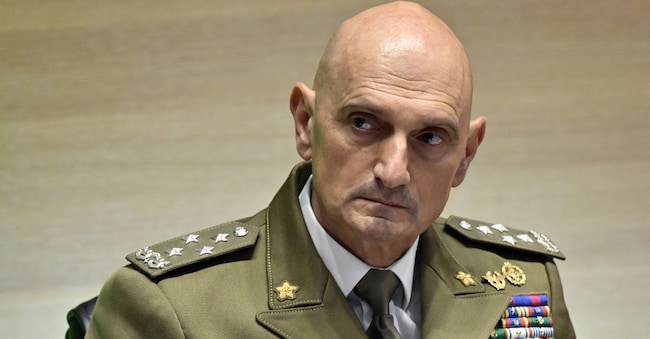
by Andrea Carli

Il generale Luciano Portolano, Capo di Stato Maggiore della Difesa

7' min read

Translated by AI
Versione italiana

7' min read

Translated by AI
Versione italiana

After an internal tug-of-war within the majority, parallel to that over the manoeuvre, with the League pressing to curb further military aid to Kiev and the Italian Communist Party and Fi committed to keeping the bar firmly on the straight in the direction of convinced support for Volodymyr Zelensky, the decree-law that extends for a year the authorisation to transfer military means, materials and equipment to Ukraine is nearing its end. The margins for a few concessions to the Carroccio are outlined, with a formula that also includes aid for the civilian population, and there is also talk of a reference in the preamble to the ongoing negotiations, but the substance of the measure that will land on the Council of Ministers' table tomorrow will not change compared to the decrees that have allowed twelve supply packages to be sent over the past four years. General Luciano Portolano, Chief of Defence Staff, is well aware of the current state of the balance of power between the Ukrainians and the Russians, and is aware of the contribution that Italy can and wants to make to achieve a ceasefire and peace.

General, which weapons systems is Italy counting on to support the Ukrainians in the clash against the Russians? Should a ceasefire be reached and a mission under the UN umbrella emerge, would Italy be ready to contribute?

Loading...

The Italian Defence continues to provide support on a bilateral basis to Ukraine through the supply of materials, vehicles, and military equipment authorised by the 11 interministerial decrees, for a total value of over 3 billion euros. As you know, there is the 12th decree under discussion. With regard to a possible Italian contribution in the post-conflict phase, it will be up to the political authority to establish when and how Italy will eventually participate. We will be ready.

Talking about Ukraine and Russia, do you agree with Admiral Cavo Dragone's words about a 'pre-emptive war' against Moscow? The chairman of Nato's Military Committee in the FT interview was talking about cybersecurity.

In his recent statements, NATO Secretary General Mark Rutte reiterated the constant threat Russia poses to the Alliance's member states. Admiral Cavo Dragone referred to NATO's posture in the field of cyber security, but there are many other activities that can be ascribed to the so-called hybrid warfare, which invest the physical, virtual and cognitive environments, that of disinformation and information manipulation.

Do you think the warning of the NATO Secretary General who said that the Atlantic Alliance is 'Russia's next target' and that the member states must adopt 'a war mentality' is correct?

We live in an era where conflict boundaries are blurred and attacks can strike critical infrastructures, communication networks and cybernetic systems even in peacetime. It is not a matter of conjuring up far-fetched scenarios, but of recognising, without unnecessary alarmism, with responsibility and objectivity, that the so-called defence function is no longer confined to theatres of operation, but directly involves citizens, who are called upon to feel an active part of collective security. Being ready to react and support the allies requires constant commitment and preparation: this is our mission.

General, you emphasised the need to avoid contingency and fragmented approaches. Do you think this strategy is practically feasible, also considering the difficulties Europe faces in developing the project of a European army?

As I recently illustrated in the hearing before the Joint Defence Committees of the House and Senate, with the 2025-27 Multi-Year Planning Document, the Ministry has defined the objectives and priority capabilities to be developed and translated into concrete results. It is not a simple list of programmes, but a process of adaptation and transformation that orients organisational models, investments and technologies.

Any examples?

The Defence approach, oriented towards multi-domain and overcoming technological asymmetries, envisages targeted investments in all sectors. To give just a few examples: 426 million for space systems (Sicral 3 and orbital surveillance), 3.53 billion for land modernisation, 2.53 billion for maritime assets, 4.55 billion for air assets. To the macro-sector of command and control, digitisation and infostructures, 1.14 billion is allocated, to Research and Development 340 million, to infrastructure assets 1.32 billion. The largest item, 5.44 billion, concerns the maintenance of the operational conditions of the Armed Forces, the cornerstone of the sustainability of the military instrument.

Minister Crosetto emphasised the need to align the timing of the industrial system with national security objectives. What are the consequences of this deviation? Can you give us concrete cases?  

The Armed Forces' ambitious capability recovery plan, after a long period of disinvestment, brings with it the need to strengthen the defence industrial base, increasing national production capacity, reconstituting essential production lines - such as those for nitrocellulose and nitroglycerin - and modernising the Defence Industries Agency's plants. It is an effort aimed at ensuring strategic autonomy, logistical resilience and continuity of supply, indispensable conditions for sustaining prolonged operations and reducing dependence on foreign supply chains in sensitive sectors.

Employees: according to the Minister Crosetto the Armed Forces today are not fully equipped to guarantee an adequate level of protection and deterrence. There is talk of 160,000 personnel, of which 10-15,000 new units are to be trained in the area of new technologies and artificial intelligence against the hybrid warfare that is already underway: of these five thousand would only be needed in the cyber area, plus the new reserve forms. What is your opinion on this?

Staffing levels must be commensurate with the military capabilities to be expressed. With this in mind, the Budget Law 2026 provides for an initial increase of 10,000. To this is added the concept of forces in reserve, divided into two components: 'operational in service or on leave' and 'voluntary on a specialist and territorial basis'. The aim is to rebalance staffing levels in all sectors, particularly, at this historic moment, in the cyber security sector, by enhancing human skills, the real centre of gravity of Defence. The increase in personnel will be the result of a systematic process, which will take into consideration the overall needs arising from the defence of the territory and Italy's vital and strategic interests and from the commitments undertaken within the Atlantic Alliance and the European Union.


General Portolano, the topic of how and when to strengthen and modernise our armed forces (such as those of the Twenty-Seven) has been on the agenda for months. What, in your opinion, are the main Italian vulnerabilities that Minister Guido Crosetto often alludes to and how to overcome them?

The recent conflicts in Ukraine and the Middle East highlight the need to ensure sustainability of conventional response, weapons availability, force readiness and technological evolution. In this context, Defence has launched a wide-ranging process of modernisation and renewal of the Armed Forces to ensure operational readiness and an effective deterrence capability. The General Inter-Forces Planning 2025, conceived as a living document, identifies programmes and resources to be developed according to three capacitive drivers: the National Defence Military Plan; the country's commitments with NATO; and the institutional tasks envisaged by law. Europe needs the technical time to organise an effective defence, which translates into the need to also invest in strategic capabilities hitherto guaranteed by the United States (air and anti-missile defence, long-range precision shooting, strategic transport, military intelligence, space assets of various types).

How do you reconcile the strategy of reinforcing staffing levels with the barracks decommissioning process?

The plan for the disposal of infrastructures that are no longer useful for institutional purposes must be in line with the forecasts of the General Inter-Forces Planning, being consistent with the new scenarios, emerging threats and possible personnel adjustments. The plan moves in parallel with a process of redevelopment of military real estate, which aims to ensure greater efficiency and sustainability, with the additional objective of generating economic resources, useful to the country system.

According to the Minister, "It is necessary that the military employed in Strade Sicure can calmly in time, agreeing this with the other ministries, return to their work in the future, which is now more indispensable than ever". Do you agree? 

Since the beginning of my term as Chief of Defence Staff, I have pointed out that new threats and changes in the global security environment require defence reform and an increase in military personnel. All this would mean that the approximately 6,500 military personnel currently deployed for 'Strade Sicure' to guard the territory, in support of the Police Forces, would return to their primary role.

The missions decree of the end of April provided for the establishment of a high and very high operational readiness force. With a maximum size of 2,867 units and an asset composition of 359 land vehicles, 4 naval vehicles and 15 air vehicles, it will be deployed in the NATO area. At what stage is the readiness of this team?

The Forces you mentioned represent a package of high and very high operational readiness capabilities, which I strongly supported being specifically provided for in the authorising instrument governing international missions, so that the response to the occurrence of crises or emergency situations could - always under political control - take place as quickly and effectively as possible. These include, above all, the Italian contribution to the Allied Reaction Force, NATO's strategic multinational force with high readiness, which from 2023 will be centred on the NATO Rapid Deployable Corps Italy, based in Solbiate Olona (VA), and on other valuable assets with high technological content, which represent the flagship of the Armed Forces in terms of capabilities, professionalism and experience, matured over years of training and operational commitments with the main countries of the Alliance. Therefore, not only are we ready to operate and constantly practising to do so, but we are among the main and most active contributors to collective security.

You were recently in Saudi Arabia, where you met, among others, your counterpart, General Fayyadh bin Hamed Al-Ruwaily. What kind of cooperation is in place and could be further developed with Riyadh? In what fields? The Arab country has expressed interest in joining the Gcap, the sixth-generation fighter project, what can you tell us about this?

In the meeting with my Saudi counterpart, I noted the importance that the counterpart places on military cooperation between our countries, as well as the shared desire to strengthen collaboration in the intelligence sector and the sharing of information between reliable partners. In the field of industrial cooperation, we carried out a comprehensive review of the activities of interest, agreeing to continue joint work to strengthen cooperation in the operational and industrial sectors.As for the Global Combat Air Programme (GCAP), we should recall the words that Prime Minister Giorgia Meloni issued in January of this year. Indeed, the Prime Minister recalled how these inter-state agreements on defence are extremely delicate issues, involving multiple priorities and strategic interests.

Copyright reserved ©
Loading...

Brand connect

Loading...

Newsletter

Notizie e approfondimenti sugli avvenimenti politici, economici e finanziari.

Iscriviti