
Pos, what the company risks in case of errors: fines at the cash desk and possible closure
Business representatives call for tolerance on sanctions

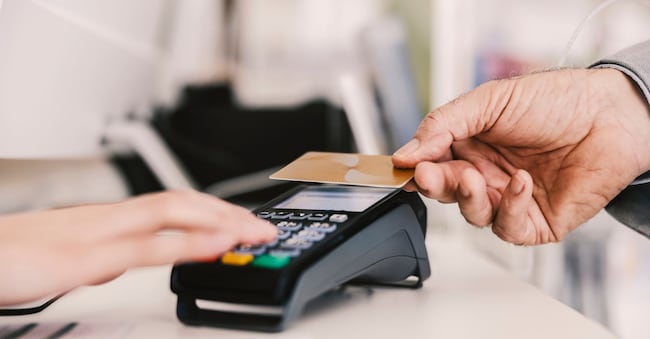
Pos, a carelessness can cost the cashier and the shop dearly. With more than four mistakes, made on different days, in addition to the 100 euro penalty for each incorrect entry, one can risk the closure of the shop. While, on the one hand, the adequate time, provided by the financial administration, to arrive prepared for the between Pos and telematic registers, from next 5 March, allows the transition to be made prepared, on the other hand, concern rises over the effects of excessive penalties in the face of errors and carelessness, especially in the first start-up phase.
Preliminary and registry check
The concern is common among representatives of business associations that are assisting their members in this preparation phase and are in constant contact with the tax agency. Precisely so as not to underestimate the extent of the obligation, the word of mouth that business associations and acquirers (those who sign contracts for the management of Pos) are spreading is to carry outa prior and anagraphical verification of the instruments existing in the company, perhaps even forgotten in drawers. The Inland Revenue already possesses the data, on the acquirer side, of the Pos distributed, whether physical or virtual; from 5 March the operator, or his delegated professional, will enter the tax drawer and see what is registered in his name, he will have to proceed to confirm the matches or, in the case of anomalies, verify them with the data he should have retrieved in these very days.
The voices of business associations
Are we facing a big brother of tax receipts? Absolutely not. 'I would not speak of a big tax brother on receipts,' summarises Francesco Seminara, tax representative of Confesercenti, 'but rather of a greater interoperability of databases, aimed at more automatic controls.
Calm and chalk is the message conveyed by Andrea Trevisani, tax manager of Confartigianato: 'The real test will take place on 5 March when the connection will actually go live, the real challenge will be whether the correspondences between the Pos in equipment and the data that the Agency has will be correct. The operation would be trivial in itself, but we have to see whether it will be completed consistently'.
Another point of common agreement is that for consumers, in terms of price, nothing will change, the operation is at zero cost: 'The Agency has avoided the physical connection, allowing the logical one,' explains Claudio Carpentieri, tax manager of Cna, 'this means no cost of software updating or change of machine but a connection to be managed in the taxpayer's virtual drawer with the logical pairing of machines. 'Compared to the initial hypothesis, the solution found solves many problems,' considers Professor Umberto Filotto, secretary general of Assofin, 'the Agency has been very attentive and has managed to ensure that the connection takes place logically and not physically, there is no hostile attitude but, on the contrary, a willingness to solve problems.

