

Pre-ski exercises: here’s what to do to protect your bones, tendons and joints
A training programme featuring bespoke exercises for at home and in the gym to improve balance and maintain wellbeing, with a focus on equipment

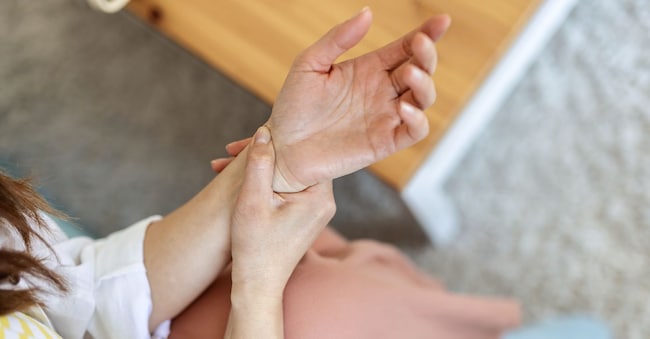
DOMS: literally Delayed Onset Muscle Soreness. In short, a muscle condition that develops gradually in the days following exercise. For those hitting the slopes with muscles, tendons and joints that are a little out of shape, it is perhaps the least serious problem they might encounter. In short, for those preparing for a skiing holiday, as well as getting their skis, snowboards, helmets and ski suits ready, it would be wise to focus on physical preparation through appropriate training – the classic ‘pre-ski’ programme – which provides adequate aerobic and neuromuscular conditioning. ‘It takes several weeks of training with exercises that build endurance and responsiveness,’ points out Marco Minetto, Director of the School of Specialisation in Physical and Rehabilitative Medicine and lecturer at the University of Turin.
What are the risks?
Skiing on traditional skis is not the same as snowboarding in terms of the primary physical exertion required and the strain placed on the musculoskeletal system. Traditional skiers tend to suffer mainly from knee ligament injuries, whilst snowboarders experience more injuries to the wrist, elbow and shoulder, and fewer to the knee. Why is this? Traditional alpine skiing places the bulk of the strain on the knees, which are ‘stressed’ by the need to suddenly shift body weight whilst descending a black run or to avoid a sudden obstacle. Newer disciplines, such as snowboarding, on the other hand, tend to put other parts of the body under considerable strain as well. To prepare for traditional ‘skiing’, however, it is first and foremost necessary to strengthen the knee ligaments to prevent sprains – that is, minor injuries to the ligamentous bundles – or, worse still, ligament tears. With carving, the strain tends to be ‘concentrated’ on the knees because the turns required in this discipline are generally wider than those made on traditional skis. And it is precisely during these wide turns on the run that the knee remains ‘rotated’ for several seconds, in rapid, alternating sequences. Consequently, body weight shifts rapidly from one side to the other, putting the ligaments under severe strain. For snowboarders, however, the shoulder and spine are the parts of the body most frequently ‘affected’ by accidents.
Tailor-made training
“It is, however, essential for all disciplines to improve physical endurance: anyone planning to spend several hours on skis must be able to run for at least 30 minutes straight without feeling excessively tired, or must at least be able to walk at a brisk pace for 1 hour or more,” says Minetto. Not only that: muscle strength and balance must also be improved. The muscles that need strengthening are primarily those of the lower limbs, particularly the front of the thigh and the back of the leg. Muscle strengthening for these areas can be achieved either through gym workouts or with simple exercises that can also be done at home.’ Examples of these exercises include squats or lunges (you can vary things with alternating, forward or side lunges) or step exercises (known as ‘step training’) or repeated standing-up movements from a chair (known as ‘sit-to-stand training’). Exercises designed to relax and stretch the back are also essential, as are exercises to strengthen the abdominal muscles.
What to do on the slopes
Don’t overexert yourself when it’s cold. And focus on warming up, including through stretching – a targeted form of training that improves the muscles’ flexibility and is particularly useful for activating the muscular system, making it ‘stronger’ and better prepared to withstand the stresses of intense physical activity. It involves slowly moving into a specific position, which is then held for a few seconds, during which you should feel a ‘stretch’ in the muscle group whose flexibility you wish to improve. Once you have achieved this, you should hold the position for short periods. These exercises are particularly recommended for the legs, arms and back. They should be carried out for around twenty minutes before skiing, devoting time and attention first to the leg muscles, then to those of the arms and shoulders. Improved muscle flexibility reduces the risk of injury to both muscles and tendons. ‘Physical preparation, however, is not the only approach to follow for preventing injuries whilst skiing,’ concludes Minetto. ‘You need to pay attention to the weather and snow conditions: all experienced skiers know that the snow can be perfect in the morning but ‘heavy’ in the afternoon because rising temperatures and exposure to the sun during the day can partially melt the ice crystals, transforming ‘fresh’ snow – that is, soft and dry – into damp, compact snow. Finally, care must be taken when choosing equipment (wearing a helmet, for example, is essential to minimise the consequences of head injuries from falls) and the principle of progressive exertion must be respected; in other words, it is advisable to start the day on easy slopes and calmly ‘refresh’ your basic physical and technical movements, to regain confidence with both the equipment and the snow. And remember: if you start to feel tired, your neuromuscular responsiveness decreases, thereby increasing the risk of falls and injuries.”

