

Medical prescriptions only in digital format, even those for medicines paid for by citizens
With this measure, the dematerialised medical prescription definitively enters into force, with no need for further extensions

2' min read
Key points
2' min read
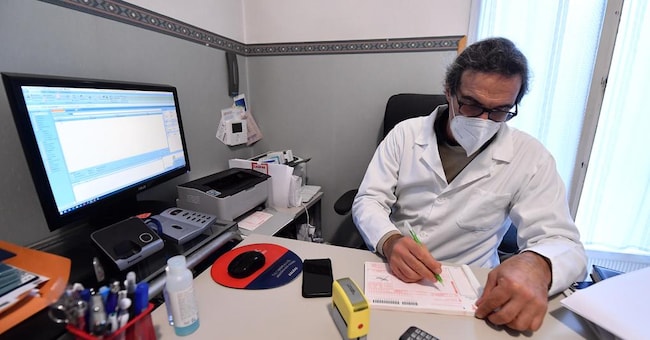
All medical prescriptions from now on will be digital only: not only the 'red' ones issued by the National Health Service, but also the 'white' ones for medicines that citizens pay for themselves. The novelty is contained in the budget manoeuvre and will come into force as soon as it is published in the Official Gazette, in any case by the end of the year. With this measure, the dematerialised medical prescription will definitively enter into force, with no need for new extensions (the last one expires in 2024) after the Covid trial, when Italians learned to receive prescriptions on their mobile phones.
The measure envisaged in the budget manoeuvre
The novelty was also contained in the simplification bill, which is, however, still at a standstill in the Chamber of Deputies, hence the acceleration in the manoeuvre precisely so as not to expire the last extension of this modality, to which the vast majority of Italians seem to have become accustomed. In particular, Article 54 of the budget law provides that 'in order to strengthen the monitoring of prescriptive appropriateness as well as to ensure the complete supply of the electronic health record, all prescriptions charged to the National Health Service and territorial services for the health care of seafarers, maritime and civil aviation personnel and charged to the citizen shall be made in electronic format'. The rule does not provide for specific obligations or sanctions, but states that 'the regions, in the exercise of their supervisory and control functions, shall ensure, by means of the authorities competent for the territory, the implementation' of this measure. Obviously no one will prohibit doctors and citizens from continuing to print prescriptions, but what does change is that they must always be generated in digital format.
Difficulties for the elderly and 'excluded' drugs
.For family doctors, not much changes compared to today, although Sergio Bartoletti, deputy secretary of the Fimmg, points out that 'not all drugs in white prescriptions are dematerialisable: for example, sleeping pills and tranquillisers are not'. On the difficulties for the elderly, he points out that 'today we already print prescriptions for them when they come to the surgery and we will continue to do so if necessary. What we are asking is that all other medical specialists, including dentists, also do digital prescriptions and not force us to act as printer-contractors by materially making prescriptions for them'. For the Spi CGIL secretary, Tania Sacchetti, who represents pensioners, 'the rule does not provide for accompanying measures such as the opening of help desks or services to help the elderly or those who have difficulties with digitalisation. There is thus a risk of introducing a factor of social exclusion'.


