
Prince, ten years since his death: how much his estate is worth and who controls it
The Minneapolis genius departed on 21 April 2016, leaving behind a 'safe' full of unreleased records. Today it is all in the hands of the Prince Estate
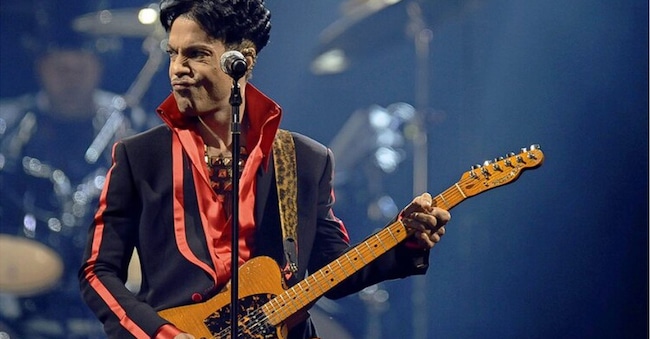
If anyone should still have doubts about how current his artistic testament is, they can watch the last season of Stranger Things: it wouldn't be the same without When Doves Cry and especially the immortal Purple Rain. Because Prince died on 21 April 2016, exactly ten years ago, but in truth he never left: he is still here to keep us company in the retro-maniacal age of popular music, in this eternal present where what we will listen to tomorrow, after all, we have already listened to yesterday. A perfect era for an artist who had plenty of substance, but knew how to play with form like few others in the world. To the point of transforming it into the added value of his art.
Minneapolis Genius, for the American critics who welcomed his work at the end of the seventies, grasped the elements of continuity with black music (the 'Genius', at the time, was above all Ray Charles) but also the signs of breaking with tradition. There was soul and funk, of course, a few sprinkles of jazz that made everything more original, a wink at pop because the Eighties were just around the corner and people wanted to dance, veins of psychedelic rock, because Prince was also an excellent guitarist. And he wasn't bad with the rest of the instruments either. It's no accident you're called Genius. It is not by chance that such a Miles Davis, who is like jazz made flesh, compares him to Duke Ellington, drawing on him the wrath of so many illustrious colleagues.
Since For You, his 1978 debut album, Prince has always been a case. Like when in 1987, at the height of his success, he released The Black Album, a black answer to the Beatles' 'White Album', the author of which was supposed to remain unknown but which, shortly before release, was withdrawn and sent to the scrap heap without anyone ever really understanding why (it was released in '93). Death to half-measures: in a career spanning almost 40 years, Prince has alternated between global bestsellers (the seminal Purple Rain concept) and flops of resounding proportions (one above all: Graffiti Bridge), extremely rich contracts (the famous $100 million contract with Warner Music in 1992) and continuous transformations of his persona with related name changes (Tafkap, or 'The Artist Formerly Known As Prince', The Artist, Symbol, all for him, who was born Prince Rogers Nelson) in periodic controversies with the majors of the record industry. At one stage he even had himself portrayed with the provocative writing 'slave' on his cheek.
If, however, there was a slavery he never wanted to escape, it was certainly that of sex: his games with the ambiguity of the 1980s were formidable (see the cover of Love Sexy), the female portraits in his lyrics left little to the imagination ('I knew a girl named Nikki/ I guess you could say she was a sex fiend'), the circle of beautiful and talented women he loved to surround himself with.
But the great love remained music: he was able to do everything on his own in a recording studio or on a stage. He could never get enough of it: after official gigs, he was able to spend himself in exhausting jam sessions in the last club in town. Among the first to sell his music directly online, a few months before he left he surprisingly denied his songbook to the most popular platforms Spotify and Apple Music, granting exclusivity to Tidal, a system launched by rapper Jay Z. Today on Spotify his songs are there and have 21.3 million monthly listeners. Roughly the same as Bruce Springsteen or U2, stars of his own generation still on the scene.


