The Emergency

Prisons, over 64,000 prisoners out of 46,000 places actually available

The picture taken by the XXII Antigone Report on detention conditions in Italia, entitled "All closed". In eight detention institutes, the crowding rate even exceeds 200%

by Andrea Carli

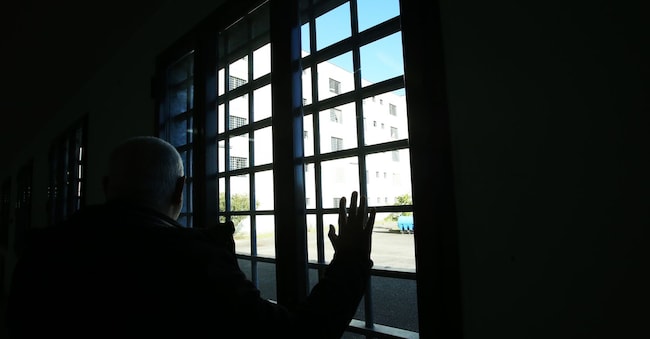
Carceri italiane sempre più affollate e chiuse (nella foto l’istituto di detenzione di Bollate)  IMAGOECONOMICA

3' min read

Translated by AI
Versione italiana

3' min read

Translated by AI
Versione italiana

Italian prisons are increasingly crowded and closed. According to the photograph taken by the XXIInd Antigone Report on detention conditions in Italy, entitled "Tutto chiuso" (Everything closed), as of 30 April 2026, 64,436 people were detained in Italy's c prisons, compared to a regulatory capacity of 51,265 places, which is reduced to only 46,318 places actually available. The real overcrowding rate thus reached 139.1%.

The survey results stem from 102 monitoring visits carried out in penitentiary institutes throughout Italy by Antigone's Observatory on detention conditions.

Loading...

The system of alternative measures to detention is being rolled back

For the first time, the system of alternative measures to detention is slowing down, and in some cases backtracking: fewer and fewer people are leaving prison. In 2025, 24,627 people were taken into custody by the Uepe (Local Office for External Criminal Execution) for probation to social services, the most widespread alternative measure, down from 26,151 in 2024. The same is true for home detention, whose new cases fell from 14,247 in 2024 to 13,519 in 2025.

While prisons continue to fill up, Antigone denounces, the instruments that could ease the pressure on institutions and favour more effective paths of reintegration are used less and less. At the end of 2025, 24,348 prisoners had a remaining sentence of less than three years and could potentially have had access to an alternative measure. Among them, 7,790 persons had less than one year of remaining sentence to serve.

Today, more than 60 per cent of prisoners spend almost the entire day locked in their cells. Only 22.5 per cent are in dynamic surveillance sections.

In 2025, 82 people took their own lives in prison. Since the beginning of 2026 there are 24 suicides. In less than a year and a half, 106 inmates have committed suicide. Acts of self-harm remain over 2,000 for every 10,000 prisoners: on average, one in five prisoners performs self-harming acts.

In eight prisons the crowding rate exceeds 200%

There are 73 institutes with a crowding rate of 150% or more, while in eight prisons it even exceeds 200%. These are Lucca (240%), Foggia (225%), Grosseto (213%), Lodi (212%), Milan San Vittore (210%), Brescia Canton Monbello (210%), Udine (210%) and Latina (204%). There are only 22 non-overcrowded institutions in Italy. The association points out that despite the fact that the government announced a prison plan some time ago, the places actually available have actually decreased by 537 since the plan was launched.

Appeals for inhuman or degrading treatment suffered by detained persons

From 2018 to 2024, the surveillance courts accepted more than 30 thousand appeals for inhuman or degrading treatment suffered by detained persons. Numbers higher than those that led to the conviction in the Torreggiani v Italia judgment, when there were around 4,000 appeals filed.

Longer sentences

According to Antigone, the increase in admissions does not depend on an increase in crime. Crimes in Italia remain substantially stable and in the first months of 2025 they are decreasing by 8%. Prison admissions are also decreasing and the use of pre-trial detention continues to fall, which now concerns 24.1% of prisoners. On the other hand, longer sentences and the effects of the punitive policies adopted by the government, which has introduced more than 55 new offences, more than 60 aggravating circumstances and more than 65 increases in sentences since the beginning of the parliamentary term, are on the rise.

45.9 per cent of prisoners have already been in prison between one and four times

But above all, adds the association, the system continues to fail on the decisive ground: preventing those who leave prison from returning to crime. Today, only 40.8 per cent of prisoners are on their first imprisonment. 45.9% have already been in prison one to four times. 10.6% between five and nine times. 2.7% even more than ten times. This is the demonstration, Antigone again observes, of a system that does not reintegrate and, consequently, only produces more insecurity.

Only 29.3 per cent of prisoners work

 On the other hand, the data on the activities that would be fundamental for reintegration paths explain why this recidivism is largely underinvested: only 29.3% of prisoners work; 85.6% of them work for the prison administration, often in tasks that are not very spendable outside; only 4.9% work for external subjects. Barely 7.9% attend vocational training courses, only 31% attend school. And barely 3% are enrolled at university.

Copyright reserved ©
Loading...

Brand connect

Loading...

Newsletter

Notizie e approfondimenti sugli avvenimenti politici, economici e finanziari.

Iscriviti