
Groups, privacy and artificial intelligence: how WhatsApp is changing for teenagers and parents
With notifications when children interact with groups and a ‘Restricted Content’ option for AI, WhatsApp aims to protect teenagers without invading their privacy

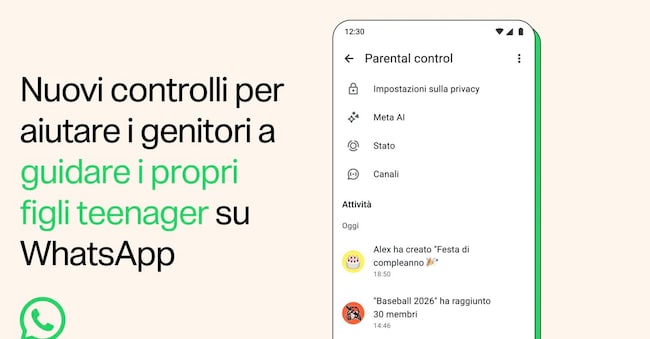
Meta continues to integrate artificial intelligence into its services whilst, at the same time, strengthening safeguards for younger users. The new parental controls announced by WhatsApp on 30 September bring these two areas together, allowing parents to manage their teenage children’s privacy settings and their experience with Meta AI.
The update will allow parents to receive notifications about their children’s activities in groups and to opt for a more restrictive approach to the use of artificial intelligence: these are optional tools, to be configured together with the children, which will, however, keep the content of conversations private. This new feature stems from an issue that concerns many families: how can we support our children’s digital independence when the smartphone becomes one of the main platforms for their social interactions?
Specifically, parents will be able to decide who can view their teenager’s profile picture and who can add them to a group: two choices which, whilst seemingly harmless, have a significant impact on personal visibility and opportunities for interaction within the platform. It will also be possible to choose to receive a notification when their child joins a new group, leaves one, or when the number of participants increases significantly: this latter alert, for example, can help identify changes in a digital environment, flagging when a conversation initially limited to a few members expands to a wider circle. The announcement does not specify what level of increase will trigger the alert; in any case, the notifications will flag these events whilst preventing access to the content of the conversations. It will also be possible to choose how children use Channels, which status updates they can view and who can see those they post. As previously mentioned, there are also new developments on the artificial intelligence front. For Meta AI, a default 13+ setting and a more restrictive option, called ‘Restricted Content’, will be available; however, the press release does not detail the differences between the two modes, such as the topics or responses to which the restrictions will apply.

These controls will not affect the protection of personal conversations: messages and calls will continue to be protected by end-to-end encryption, and their content will remain accessible only to those taking part in the conversation. Parents will therefore not be able to read or listen to them via the supervision tools, but they will be able to adjust the level of controls or disable them at any time. If, on the other hand, the teenager wishes to relax the protected privacy settings, parental approval will be required via the PIN chosen by the parent.

