Russia

'Navalny was about to be released when he died'

The president of the Anto-Corruption Foundation (Fbk) he founded, Maria Pevchikh, revealed that the opposition leader was about to be released as part of a prisoner exchange. But Putin changed his mind

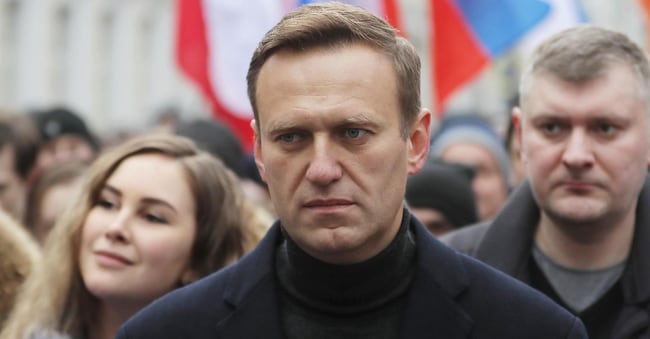
Alekseij Navalny

3' min read

3' min read

Yulia Navalnaya had foretold this, in the 19 February video in which - three days after her husband's death - she claimed to 'know exactly why Vladimir Putin killed Aleksej'. And as aides heralded a 'public farewell' to Navalny by the end of the week, the president of the Anti-Corruption Foundation (Fbk) he founded, Maria Pevchikh, revealed that the opposition leader was about to be freed as part of a prisoner exchange.

"Why did Putin kill him now?" is the title of the video in which Pevchikh explains that on the evening before his death, 15 February, he had received confirmation that the negotiations begun two years earlier had reached the final stage. Then, Putin changed his mind.

Loading...

"Aleksej could have been here today,' Maria Pevchikh recounts. After the war began, it became clear that Navalny had to be taken out of Russia: Putin would stop at nothing. At first it seemed impossible: Aleksej is a Russian citizen, a foreign state is not obliged to defend his rights'. The solution was a humanitarian exchange: Russian spies in exchange for political prisoners.

The exchange with the Russian service agent in Germany

.

The Fbk president explains that not all the people contacted - senior American and German officials, one name being Henry Kissinger - moved, although they showed solidarity. 'But there are those who have helped us, although they did not want to make their names public'. Last September, a Wall Street Journal article began talking about the possibility of an exchange with Vadim Krasikov, a Russian service agent serving a life sentence in Germany for the murder of Zelimkhan Khangoshvili, a former Chechen rebel commander killed in 2019 in Berlin's Tiergarten. Two other US citizens detained in Russia would have been part of the deal.

Putin himself had made it clear who he wanted to exchange: in the recent interview with the American journalist Tucker Carlson, the Russian president does not mention Krasikov's name but mentions 'a person who eliminated a bandit in a European capital, out of patriotic sentiments. We are ready to talk, talks are in progress'.

These words, however, were in response to a question about the possibility of a release for Evan Gershkovich, the Wall Street Journal correspondent arrested in Russia on espionage charges. Maria Pevchikh, however, explained that it was the businessman Roman Abramovich - a person capable of dealing with Americans and Europeans - who proposed to Putin an exchange with Navalny, the only way to get Krasikov back. This confirms that for some reason the return of what Pevchick calls 'the Berlin murderer' is crucial for Putin.

Putin changes his mind

.

The rest of the story is the answer to the initial question: why then kill Navalny? The idea of seeing him free was unacceptable to Putin, explains Maria Pevchikh: 'He hates him because Navalny was a true politician, a man for whose ideas people risked their freedom, he was everything Putin can never be'. So the Russian president said that if the West agreed in principle to the idea of releasing Krasikov, all he had to do was get rid of the 'bargaining chip' and then, later, offer someone else in exchange. Perhaps a dissident less dangerous in its eyes than Navalny, like Vladimir Kara-Murza.

'A mobster's behaviour,' says Maria Pevchikh, 'Putin knows that Aleksej Navalny could have defeated him: he is the future, Putin the past. And Putin knows for sure that thanks to Navalny's investigations he will go down in history as a cowardly and corrupt thief'.

Navalny, il corpo consegnato alla madre

The wife also knew about the negotiations

.

According to a source close to the negotiations questioned by the Reuters agency, both Navalny and his wife Yulia were aware of the prisoner exchange, which was supposed to take place in mid-February. The latest confirmations had taken place on 9 February, during German Chancellor Olaf Scholz's visit to the White House: while initially the exchange was supposed to concern only Gershkovich and Krasikov, it was Navalny's inclusion that convinced the German authorities to agree.

The ceremony for Navalny

While the Fbk Foundation released the video of Maria Pevchikh, spokeswoman Kira Yarmysh let it be known that a suitable place is being sought to publicly pay homage to Navalny, whose body was returned to her mother after a long wait in Salekhard, on the Arctic. But if the place of burial is supposed to be Moscow, uncertainty remains as to how the authorities will allow a funeral that is bound to turn into a demonstration against the regime. 'Navalny was a symbol of defiance,' Russian writer Boris Akunin, speaking to the BBC, commented in recent days. 'And in the Kremlin's logic, if a person is no longer there, there is no problem. But they are wrong. From now on Aleksej Navalny will become a real problem for Vladimir Putin. They cannot kill him again. He will live forever, as a symbol'.

Copyright reserved ©

Brand connect

Loading...

Newsletter

Notizie e approfondimenti sugli avvenimenti politici, economici e finanziari.

Iscriviti