
Kaja Kallas, the former Estonian premier wanted by Russia: who she is and why Moscow wants her
Kaja Kallas, former Prime Minister of Estonia, has been placed on Russia's wanted list. The article outlines her biography, her political positions and the geopolitical context that led to her indictment

2' min read
Key points
2' min read
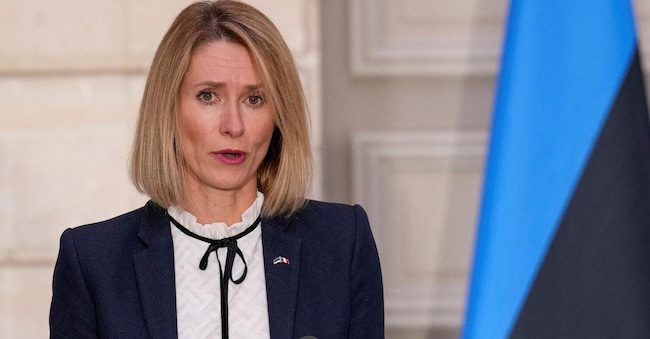
On 13 February 2024, the Russian police placed the then Estonian Prime Minister Kaja Kallas (now former, she resigned on 15 July 2024), her State Secretary and the Minister of Culture of Lithuania on the wanted list, according to the Russian Ministry of the Interior's database. This is the first time a prime minister has been placed on the Russian government's wanted list.
Kallas, the destruction of Soviet monuments
On the same day, Kremlin spokesman Dmitry Peskov (video) stated that Kallas is wanted for 'desecration of historical memory'. The Russian state agency Tass said Baltic officials are accused of 'destroying monuments to Soviet soldiers' from World War II erected in the Baltic Republic after the war when it was under USSR rule.
Russian Foreign Ministry spokeswoman Maria Zakharova (video) said: 'This is only the beginning. Crimes against the memory of the world's liberators from Nazism and fascism must be prosecuted,' Zakharova said.
Kallas: "I am doing the right thing"
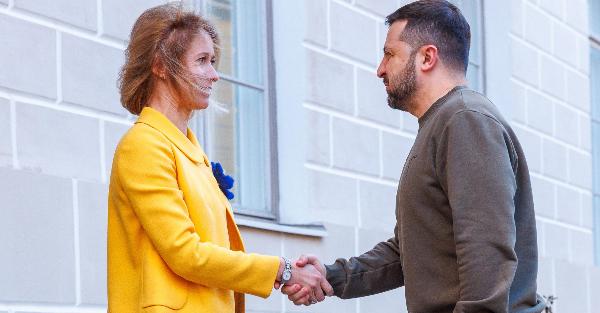
.Kaja Kallas replied that Moscow's decision to put her on the wanted list is proof that it is "doing the right thing" and added that it will continue to ensure its "strong support for Ukraine" and to fight to "strengthen the defence of Europe". Kallas, in a message on X, added that "Russia's tools have not changed", recalling that his mother and grandmother were deported to Siberia. "The Kremlin," the Estonian premier writes again, "now hopes that this decision will silence me and others, but it will not.
The Baltic nations that were formerly part of the Soviet Union have announced plans to demolish Soviet-era monuments. In 2022, Kallas stated that the Estonian authorities would dismantle 200 to 400 such monuments. In response, the head of the Russian Investigative Committee, Alexander Bastrykin, ordered a criminal investigation into the matter.

