

Putin’s aggressive move. He appoints a cyber ambassador to Egypt
Moscow is sending Artur Lyukmanov, who was director of the Department for International Information Security, to Cairo. He is not a specialist in diplomacy in the region, but an expert in securitisation in fields often linked to the intelligence services. The aim may be to create a Russian-Arab cyber coalition with an anti-Western focus. Not to mention the use of hybrid warfare tactics already in play in the Maghreb and the Sahel.

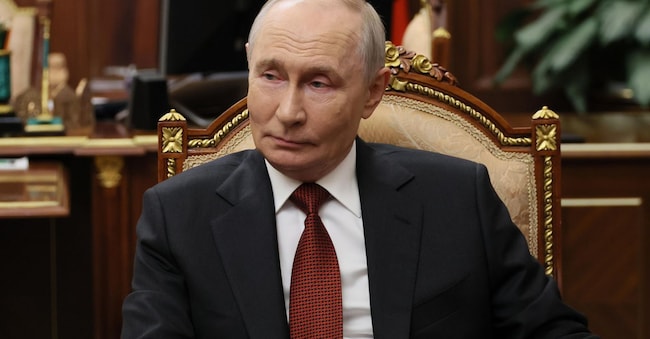
On 15 August, whilst Italians were busy on holiday and Europe was debating migration and the conflict in the Strait of Hormuz, Vladimir Putin officially announced the name of his ambassador to Egypt, one of the key countries in his strategy for establishing a presence straddling the Middle East and the Maghreb. Russia has ties in the nuclear, industrial and agricultural sectors, and has recently gained access to two free zones situated at the entrance and exit of the Suez Canal respectively. The man chosen is Artur Lyukmanov, and sending him to Cairo as ambassador is not a routine rotation. To one of the key capitals of the Arab world, Putin’s regime is sending not a specialist in the region, but a man with a completely different background. Since 10 March 2023, Lyukmanov has held the post of Director of the Department for International Information Security. To put it plainly, this is a field traditionally the preserve of officials linked directly or indirectly to the Foreign Intelligence Service (SVR) or the Federal Security Service (FSB). It is clear that what is at stake is the securitisation of Russian foreign policy in the Middle East, at the expense of traditional diplomacy. The point is not that Lyukmanov, despite having worked in Eastern countries, lacks the solid background in Arab studies that many other Russian ambassadors to the Middle East possess. The point is what background he does have.
The paradigm shift in Russian diplomacy
Since the sudden resignation, a year ago, of Mikhail Bogdanov, the former deputy minister responsible for Arab and African countries, the Middle East department of the Russian Foreign Ministry has undergone a major reorganisation, and the process appears to have been entrusted to officials from the security services. Consequently, in key posts across the Arab world, career diplomats are increasingly being replaced by supervisors from the special services rather than political envoys.
Lyukmanov’s biography
Lyukmanov’s biography should be read carefully. Born in 1977, he graduated from MGIMO: the Moscow State Institute of International Relations. In 2000, he joined the Ministry of Foreign Affairs. At some point, he moved to the Department for New Challenges and Threats. Behind this wording lie issues such as terrorism, drug trafficking, human trafficking, organised crime and all those criminal spheres in which certain aspects of diplomacy intersect with the work of the SVR and the FSB. And it was precisely from that post that, in early 2023, Lyukmanov took a further step, moving to the Department for International Information Security – a field historically linked to the intelligence services. According to available data, in 2017 Lyukmanov was listed as first secretary in the sector dealing with new challenges and threats, a position that was not particularly senior. Yet in 2023, shortly after taking charge of the Department, he made a second leap forward. In July of the same year, he became the President’s Special Representative for international cooperation in this field.
He makes rare public appearances, but his statements – on the need for a digital confrontation with hostile countries, and on Ukraine as a testing ground for Western cyber technologies directed against Russia – bear little resemblance, in their choice of words, to those of a diplomat. There is therefore no direct evidence that his main mission is to develop cyber offensives or direct intelligence operations, but there is a very high likelihood that he is in Egypt to build up strategic assets and a sort of cyber coalition encompassing Egypt and the Middle East.
The underlying strategy
The first level of impact could, in fact, lie in persuading countries in the region to align themselves with Russia at the UN on the issue of the Convention on Cybercrime. And, consequently, the scope within which one can assess what is lawful and what is not when dealing with sensitive infrastructure. Not to mention that Lyukmanov’s skills could also lead to a coalition that guarantees the BRICS countries support for data management in the field of government cyber security. On the other hand, the complex yet direct strategy of psychological operations (Psyops) and cognitive warfare employed by the Russians in the Maghreb and the Sahel to counter Western adversaries is now well known. This involves the creation of fake news and a network of social media accounts capable of intervening during moments of tension between militias and factions, and in the run-up to elections. The targets of this narrative have been French troops and also the Italian presence through the Mattei Plan, often described by local pro-Russian influencers as a new form of colonialism. In short, whether the appointment of the new ambassador reflects a desire to build a Russian-Arab cyber coalition or, worse still, something of a borderline nature, this is an issue that must not be underestimated. It is a pre-emptive move against China, which views the Arab cyber arena as fertile ground. But it is also a move that is clearly hostile towards the European and Western bloc.

