

Qatar invests a billion a year in the museum sector. The Saudis invest almost twice that amount. The Maghreb is following suit
The Gulf states have for years been using culture for geopolitical purposes and to diversify their revenue streams. Egypt, buoyed by tourism – which accounts for 8.5 per cent of GDP – is stepping up its efforts in the areas of exhibitions and cultural offerings. In Morocco, the cultural and creative sector already employs 100,000 people. For Italia, there are many opportunities and much to be done.

Setting aside times of war, tensions and Trump’s statements, which do little to promote stability, the Gulf states have made their own reorientation a stated objective, moving from being mere oil-based economies to more multifaceted societies, and among the most significant aspects of this transformation is investment in the cultural and museum sectors. And this trend shows no sign of abating. Despite their clear advantage in terms of available resources, their example has not gone unnoticed in the Mediterranean region
It is in the Gulf states that efforts to build a robust museum sector are most evident: Qatar, Saudi Arabia and the United Arab Emirates have revitalised their appeal to tourists by focusing on their shared historical, cultural and artistic heritage. Qatar, buoyed by its revenue, has an annual budget for the acquisition of works of art estimated at one billion dollars, nearly half of which is earmarked for the National Museum, which opened to the public in 2019. The museum, together with the already well-established Museum of Islamic Art and numerous other galleries across the country, is managed by Qatar Museums, a public body that plays a central role in Qatar’s cultural diplomacy. The Italian collaboration with the organisation is now in its second year: the Memorandum of Understanding between Qatar Museums and the City of Venice, signed in June 2024, has opened a privileged channel, fuelled by exhibitions, loans and other cultural exchange projects.
The growth of Abu Dhabi
Further south, the United Arab Emirates has been carrying out a number of major projects. With the Guggenheim Abu Dhabi set to open in December 2026, the country is adding another internationally renowned institution to a capital city that is already home to its own version of the Louvre, which opened in 2017 and attracts over 1.4 million visitors a year (2024 figure). Although there are no official figures on revenue, the average annual visitor numbers, combined with an admission price of around $19, suggest that the Louvre Abu Dhabi generates revenue of around $26.6 million a year. After all, this Francophile institution is no stranger to staggering figures: the brand licence fee alone, paid to France at a cost of $525 million, far exceeds the annual acquisition budgets of museums such as the Metropolitan in New York or the MoMA. Furthermore, whilst bilateral agreements between Italia and the UAE have not yet had a significant impact on the promotion of the arts, relations remain strong thanks to the biennials and the active presence of the Italian Cultural Institute in Abu Dhabi.
The situation in Saudi Arabia is different. The government’s ‘Museum Commission’ does not allocate a fixed sum of one billion every year, as Qatar does, but over the last decade it has invested as much as 21.6 billion. Its flagship project, the Saudi Museum of Contemporary Art (SaMoCA), was awarded a $490 million contract at the start of the year. Italia plays a role here too: the memorandum of understanding signed in 2023 between Prince Bader bin Abdullah bin Farhan, the Saudi Minister of Culture, and his then Italian counterpart Gennaro Sangiuliano laid the foundations for wide-ranging collaboration, explicitly including museums among the sectors covered. Numerous initiatives have followed, notably the implementation programme signed in March between the Saudi Museums Commission and the Fondazione Triennale Milano, which provides for consultancy for the Saudi Design Museum, an exchange of travelling exhibitions and new educational programmes. The opportunities are many, but there is still a long way to go to achieve these objectives.
The Egyptian example
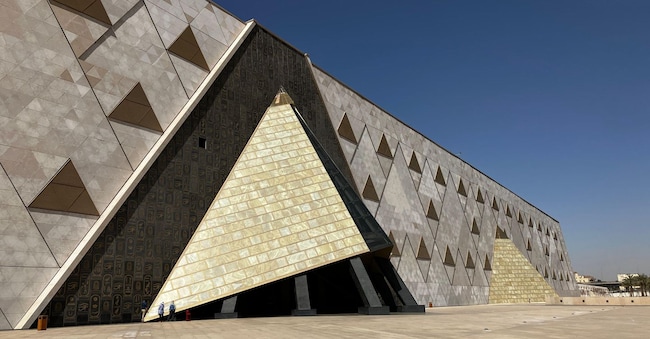
The countries of North Africa, starting with Egypt, have realised that it is worth stepping on the accelerator when it comes to the museum sector. In Cairo, where the tourism sector accounts for up to 8.5 per cent of national GDP, the most significant development is the opening, in November 2025, of the Grand Egyptian Museum: an average of 15,000 visitors a day, despite the fact that its funding is partly based on foreign loans. Having cost $1.2 billion and taken twenty years to build, the museum now houses one of the world’s largest archaeological collections and is one of the cornerstones of Egypt’s new tourism strategy. There are no official figures, but given that in the first seven months of 2026 the museum welcomed over 3 million visitors – 60 per cent of whom were foreign nationals, and therefore paying higher admission fees – revenue can be estimated at close to $14.5 million. Egypt, one of the nine pilot countries in the first phase of the Mattei Plan, shares the Italian government’s interest in the museum economy: the most recent example of this synergy is the ‘Treasures of the Pharaohs’ exhibition, which concluded in June at the Scuderie del Quirinale.

