

Rare diseases: research and innovation require effective governance
Luppi, president of MSD Italia: immediately review the caps on direct purchases, invest in prevention and set negotiated prices for at least five years

Key points
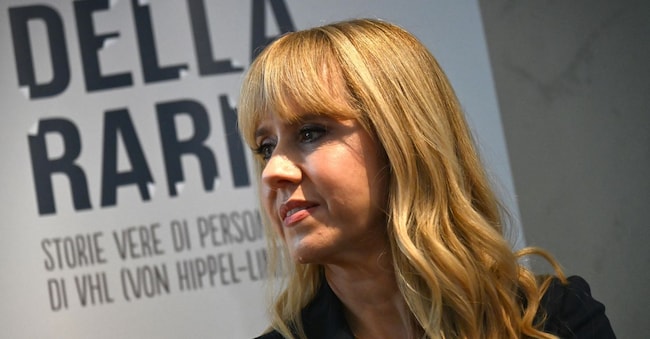
The National Health Service is showing its age in the face of a society that has changed completely, with a growing proportion of older people – who will soon form the majority – and a demographic winter with just 350,000 births a year. And the universal system, designed for an Italia that no longer exists, is showing cracks amid budgetary constraints, the need to ensure the wellbeing of an ageing population, and the wave of innovation that is enabling so many patients to live longer and enjoy a better quality of life. Nicoletta Luppi, Chair and Chief Executive Officer of MSD Italia, has chosen to present the campaign ‘Beyond the Folds of Rarity’, an awareness-raising initiative promoted by MSD under the patronage of the Italian Association of VHL Families (Onlus), dedicated to von Hippel-Lindau (VHL) syndrome, to re-emphasise the role of research and innovation.
The themes of the awareness-raising campaign
Von Hippel-Lindau syndrome is a rare genetic disorder that increases the risk of developing tumours, both benign and malignant, in various organs of the body, with a significant impact on quality of life and life expectancy. The campaign aims to portray the experience of living with the condition in an original way. The symbol chosen is origami. At the same time, the book *Beyond the Folds of Rarity – True Stories of People with von Hippel-Lindau Syndrome (VHL)* brings together patients’ testimonies, transforming them into short pieces inspired by the poetic tradition of the haiku.
“We have chosen a new and unusual way of telling the story of this disease, moving beyond clinical language and placing the focus on the patients who are living with it first-hand, with their experiences, their vulnerabilities, their strength and their hope for the future,” explains Luppi. The book accompanying the campaign draws directly on their voices and conveys not only the complexity of an ultra-rare, hereditary and multisystemic condition, but also the courage and hope of those who face it every day. Today, this hope is taking on a new sense of reality, thanks in part to advances in research which are opening up significant prospects for people who, for a long time, could only rely on clinical monitoring and local or surgical interventions, often repeated.”
How to support research and innovation
But research and innovation need fertile ground to flourish. What, then, can be done to ensure that Italia remains a centre for clinical research and a manufacturing hub? “Raising the cap on direct purchases by 0.2 per cent would give businesses some breathing space, but from 2028 it will be too late: we need to start this from 2027,” explains Luppi, outlining the priorities. “We also need to maintain innovation and access to the Fund beyond 36 months, not least because we have seen that there is capacity, and this would help prevent the direct procurement ceiling from becoming immediately overburdened once the three-year period expires.” Luppi lists prevention as her third priority: “It was conspicuously absent from this year’s Budget Law, despite requests from the Minister of Health. Yet it is the only way to keep an ageing population as far away from illness as possible, not least for the sustainability of the National Health Service.” That is why the president of MSD Italia is calling for “the €247 million included in the previous Budget Law to be made a permanent provision from at least 2027”. But that is not all.
In short, we need to lay the foundations for a new system of governance, at least by starting “with a voluntary regional pilot scheme for 2027–29 that goes beyond historical consumption levels, with an adaptive ceiling and a fund outside that ceiling to accommodate all the innovation that is set to come”. The final point concerns the stability of medicine prices. “The Most Favoured Nation clause could prevent the launch of many innovative medicines in Italy in the coming years,” emphasises Luppi. “So why not follow the example of countries that have already adopted forward-thinking approaches? In this case, we are referring to France: once a negotiation is concluded, the price remains stable for the following four years.” This would be a response to the demands of businesses and “a clear signal of attractiveness in the face of the risks posed by the MFN clause”. Moreover, MSD ranks first globally in terms of investment in research and development, and the company’s commitment to our country contributed nearly 1 billion euros to GDP last year through its investments.

