
Raw tobacco: European reform is needed
The EU Court has reopened the issue of whether waste, which is not prepared for retail sale, is ‘smokable’

Key points
In the debate on raw tobacco and the limits of smuggling, the latest rulings by the EU General Court have reopened an issue that in Italia seemed to have been settled. The EU judges have adopted a broad interpretation of the concept of ‘smoking tobacco’, emphasising the possibility that a product may become smokable even after simple industrial processing. This approach is intended to prevent tax avoidance and ensure uniformity within the European internal market.
On closer inspection, the Court’s intention was to fill a gap in the EU regulatory framework – which certainly needs an update – in order to include innovative products and to regulate all those forms of trade that do not fall within the scope of the current legislation.
The direction of case law
But it is precisely here, at the level of the implementation of the legislation in the Member States, that the case law of the Court of Cassation comes into play; over the last two years, it has drawn a clear distinction. Judgments 47306/24, 20229/25, 5441/26 and 14720/26 have established a principle that is as simple as it is decisive: the regulation regulating excise duties on tobacco is harmonised and uniform, and does not permit broad interpretations that alter the framework laid down by the European legislator.
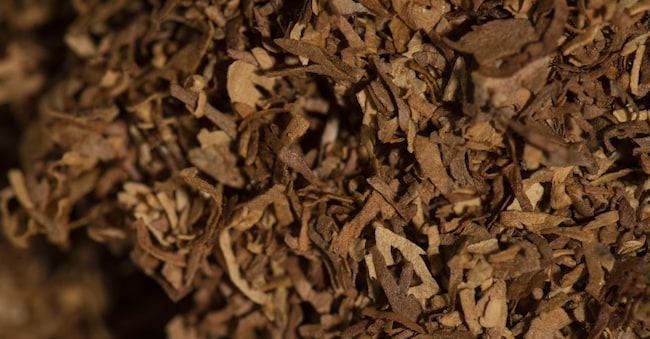
Directive 2011/64/EU (transposed into Article 39-bis of Legislative Decree 504/1995) distinguishes precisely in Article 5(1) between cut or shredded tobacco, which can be smoked as it is, without further industrial processing, and tobacco waste, which becomes ‘smoking tobacco’ only if prepared for retail sale.
This is the point that the Court of Cassation rigorously upholds: the fact that a product can be smoked is not sufficient. For a product to be subject to excise duty, it must be smokable without any subsequent industrial processing (even minimal); in the case of tobacco waste, it must be packaged for the end consumer. Without these requirements, the product remains raw tobacco, even if it appears similar to finished shredded tobacco, gives off the smell of tobacco or can be smoked after being shredded by hand.

