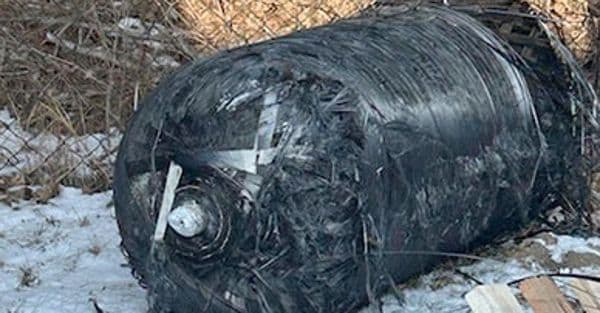
Returning satellites (even Musk's) pollute the Earth's upper atmosphere, and that is a serious danger
Several substances have negative effects on the mesosphere and thermosphere, between 80 and 120 above sea level. Also affecting the ozone layer that protects us from ultraviolet rays

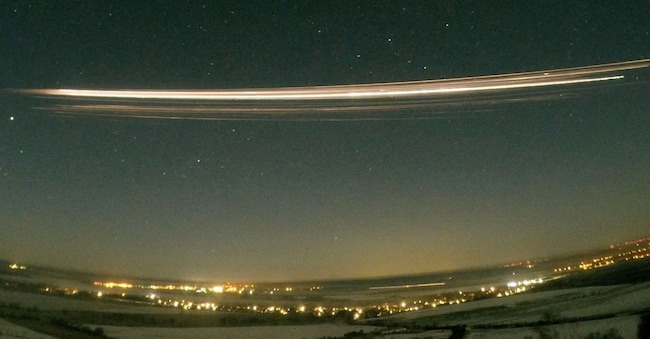
If a rocket passes over your head as it's falling back to Earth, you're usually glad it didn't hit you - it's a normal reaction. But for researchers at the emblazoned Leibniz Institute of Atmospheric Physics in Rostock, a Hanseatic city in northern Germany, it was a boon. And in the middle, as almost always in these years, is Elon Musk and one of his Falcon 9 rockets.
Their study, published these days in the leading journal in the field: Communications Earth & Environment, shows that the rain of space debris returning to Earth, as it burns as it re-enters, also introduces nasty metal pollution into the all-important upper atmosphere, between 80 and 120 kilometres above the ground.
A disturbing discovery
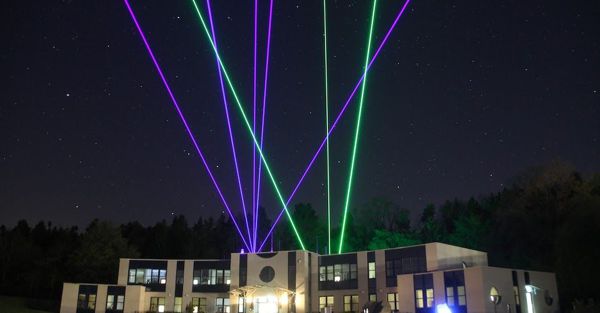
At the Rostock Institute, continuous measurements of the atmosphere are carried out using sophisticated lasers that are directed at different heights above the ground. In the course of this routine activity, they became aware last year of a very significant increase in the amount of lithium in that region, almost a cloud of this element, which is used today for all technology, that had been standing at that height for some time.
What could have happened, they wondered. With meticulous measurements, they reconstructed the course followed by the upper stage of a Falcon 9 rocket from Space X, in uncontrolled re-entry, and found that it was 'the culprit'. Using a model of the possible trajectory of a re-entering space body, they arrived at the solution: that piece of SpaceX's rocket as it passed through the thermosphere about 100 kilometres above Earth, over the Atlantic Ocean, west of Ireland, had also burnt out the lithium batteries contained in the second stage.
Of course no one could doubt that these episodes, increasingly frequent as launches number in the hundreds each year, are not good for the atmosphere, already battered by human activity, there are various studies now, but this is the first observational evidence that re-entering space debris causes a phenomenon, detectable from the ground.