

Campania recovery plan: a duel of appeals between Rome and Naples
Minister Schillaci: 'We want to avoid 'A' and 'B' regions and make sure that every citizen has the same treatment options wherever he or she lives

Key points
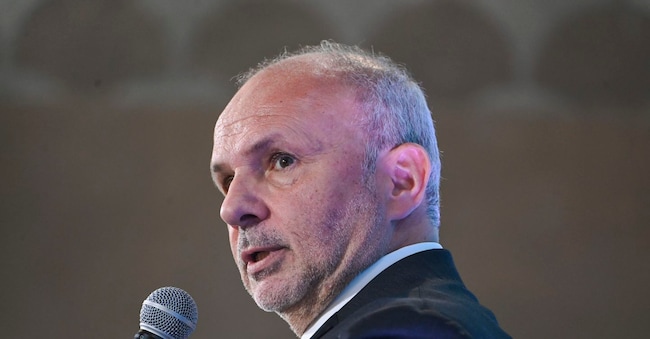
The appeal to the Council of State after the Campania Regional Administrative Tribunal's ruling on the re-entry plan will be presented 'within the deadline' by the Ministry of Health, assures Minister Orazio Schillaci, who points out 'we have our reasons. But beyond that, I believe that the thing that is most important to us is the health of the citizens, of the people of Campania'. A choice that goes in the direction of avoiding 'regions in series A and regions in series B, we want,' adds Schillaci, 'that regardless of where one lives and how much one earns, one has the same possibilities of care. This is not always the case today, even in this region, and it is our primary commitment'.
De Luca: let's wait for the ministry to apply the ruling
In the meantime, the Region is waiting and evaluating whether to take legal action in other courts as well, and hopes that it will not proceed by challenging the TAR ruling at the Council of State. "Whoever would do this would be declaring himself the enemy of Campania,' President Vincenzo De Luca said the day after the TAR ruling. 'We are waiting with serenity for the Ministry of Health to follow up on the ruling of the Campania Administrative Court and with great simplicity decide the exit of Campania from the recovery plan.
Return plan: what the Tar says
On Friday, the Regional Administrative Tribunal (TAR) issued its ruling after a hearing on 5 November, upholding the appeal filed by the Campania region against the Prime Minister's Office and the Ministries of Health and the Economy, in which the body headed by Vincenzo De Luca opposed the government's decision to deny the region's exit from the healthcare deficit recovery plan. According to the Regional Administrative Tribunal, given the grounds for the appeal and the objections raised by the State's attorney, Campania legitimately challenged measures and communications made at ministerial level, including a press release, and documented data that made Italy's third-largest region fall within the parameters set, not only financial but also Lea, by 2023.
The importance of recovering political autonomy
Among the rejected exceptions was the one concerning the Region's interest, for which the government's defence argued that remaining in the Deficit Recovery Plan is "more beneficial, allowing access to the increased state funding", the so-called bonus quota, of law no. 191/2009, while the court, also citing the Constitutional Court, held that in the face of this advantage, the region's interest in recovering its political autonomy in health matters is far greater, by escaping the constraints "of the continued subjection to the procedure for regions with a deficit health budget, including the prohibition to make non-compulsory expenditure, i.e. interventions other than those identified by the same recovery plan and subsequent operational programmes.
The panel also agreed that the decision to deny Campania's exit from the Deficit Recovery Plan relied on "partial justification and only apparent justification, generating unequal treatment and contravening the principle of loyal cooperation between the State and the Regions". This in consideration of the fact that the Campania Region, according to the Regional Administrative Court, has ensured the guarantee of the LEA levels as early as 2023, being above the threshold of 60: precisely 62, 72, and 72, for collective prevention and public health, district assistance, and hospital assistance, as recognised in the Monitoring of LEAs through the New Guarantee System.

