
Referendum, the Cdm integrates the question after reformulation. Mattarella signed the Dpr
The Central Office at the Court of Cassation accepted the new question for the vote on justice, already called for 22 and 23 March, in the version formulated by the 15 jurists
Key points
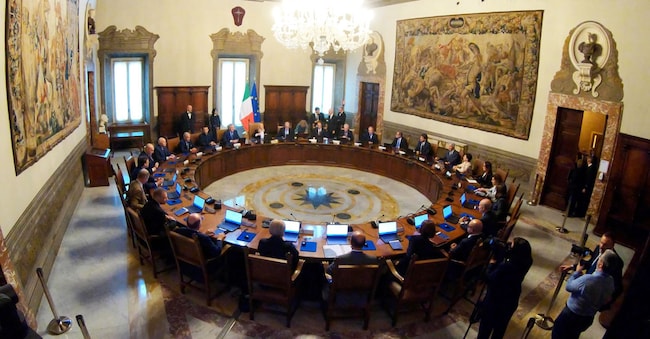
The date of the referendum does not change: the Council of Ministers decided to confirm the referendum for 22 and 23 March, but supplemented the question with the articles of the Constitution that are amended by the justice reform containing the separation of careers. The Council of Ministers was convened to address the referendum on the justice reform containing the separation of the careers of magistrates. The meeting took place in the aftermath of the order with which the Court of Cassation accepted the new referendum question in the version formulated by the committee of 15 jurists that promoted the collection of signatures of 500,000 citizens.
Mattarella signs the DPR
The President of the Republic, Sergio Mattarella, has adopted the decree of the President of the Republic, Sergio Mattarella, on the 'Clarification of the question for the popular referendum confirming the text of the constitutional law concerning norms on the subject of jurisdictional order and the institution of the disciplinary court'. The text, approved by the Council of Ministers, integrates the text of the referendum question according to the indications of the central office of the Court of Cassation, without changing the dates of the vote on 22 and 23 March.
Here is the change to the question text
The Council of Ministers, on the proposal of President Giorgia Meloni, reads the note issued by Palazzo Chigi at the end of the meeting, 'having regard to the order of the Central Office for the referendum communicated on 6 February 2026', has decided to 'propose to the President of the Republic, for the adoption of the relevant decree, to specify the question for the popular confirmatory referendum already called with the decree of 13 January 2026 in the terms indicated by the aforementioned order, without prejudice to the same decree'. Thus, 'the text of the referendum question already called for 22 and 23 March 2026 is specified as follows: 'Do you approve the text of the law revising Articles 87, paragraph ten, 102, paragraph one, 104, 105, 106, paragraph three, 107, paragraph one, and 110 of the Constitution approved by Parliament and published in the Official Gazette of 30 October 2025 under the title 'Regulations on the subject of judicial order and the establishment of the Disciplinary Court'?"
The device of the Supreme Court judges
To summarise the facts, the Central Office at the Court of Cassation accepted the new question for the referendum on justice, already called for 22 and 23 March, in the version formulated by the 15 jurists who had promoted the collection of signatures among citizens. The judges of the Court of Cassation explained in the device with which they accepted the appeal presented by 15 jurists, how the question for the referendum will therefore be reformulated. "This Office," reads the operative part, "has already admitted four requests for referendum on the text of said law, given that the question set out in said order is deemed to be no longer valid, it now formulates the new question with reference both to the request for referendum admitted herewith and to said four requests, in the following terms: 'Approve the text of the law revising Art. 87, para. 10, 102, para. 1, 104, 105, 106, para. 3, 107, para. 1 and 110 of the Constitution approved by Parliament and published in the Official Gazette of 30 October 2025 under the title "Rules on the subject of judicial order and the establishment of the Disciplinary Court?".
Bignami (Fdi), restore the judiciary's thirdness
Controversy over statements by the leader of the Fratelli d'Italia group in the Chamber of Deputies, Galeazzo Bignami. "The Cassation Court's decision to change the referendum question confirms that justice reform is a necessity. Just take a look at the judges of the Court of Cassation who decided on the reformulation of the question. These include Alfredo Guardiano, who will moderate a conference on the reasons for the No vote, and Donatella Ferranti, a former PD deputy and president of the Justice Commission until 2018. Do we need anything else to realise that we can no longer hold back on restoring the judiciary's thirdness, making it independent of politics and currents and implementing Article 111 of the Constitution? It is necessary to vote Yes in the referendum'.


