

Regenerative medicine and sport: how to protect joints and tendons

Sport is good for both body and mind, but intense and repeated strain, as is the case with running, can expose joints and muscles to acute injuries or conditions caused by overuse, that is, functional overload. Regenerative medicine is now one of the most promising avenues for those who wish to continue practising sport safely.
Dr Laura de Girolamo, a biologist and director of the Laboratory of Biotechnology Applied to Orthopaedics and of the RE.GA.IN Centre (Regenerative Galeazzi Institute) at the IRCCS Galeazzi-Sant’Ambrogio Hospital, part of the San Donato Group.
The joints most at risk
“The areas most frequently affected are the joints of the upper and lower limbs, particularly the knee, ankle and shoulder, but also the hip and elbow, depending on the sport practised,” explains Dr de Girolamo.
In football, meniscus and ligament injuries are common; in basketball, patellar tendinopathies; and in tennis and padel, the so-called tennis elbow. In skiing, on the other hand, the most common injuries affect the knee, as the ankle – immobilised by the ski boot – cannot cushion the movements. There are also fractures or dislocations of the upper limbs caused by high-speed falls.”
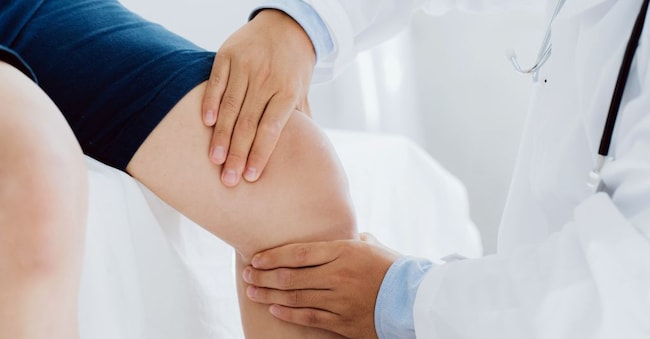
The knee is often the site of ligament and meniscal injuries, tendinopathies and early-onset osteoarthritis caused by overuse: ‘conditions which, even when not serious, can compromise athletes’ performance and quality of life’, continues Dr de Girolamo.
When regenerative medicine comes into play
In acute trauma, regenerative techniques are often used to support surgery, for example, in cruciate ligament reconstructions and meniscal sutures.
In these cases, the surgeon may use a biological preparation, such as PRP (Platelet-Rich Plasma), to stimulate and accelerate the healing processes.
‘In conditions involving overuse, on the other hand, regenerative medicine can be used without surgery through a conservative approach, typically involving injections, to promote recovery and reduce pain and inflammation’.
PRP and mesenchymal cells
The treatments are based on orthobiologicals, derived from the patient’s own blood or tissues.
PRP is obtained by centrifuging a blood sample to concentrate the platelets. These are rich in growth factors with repairing and anti-inflammatory properties.
Mesenchymal stem cells (MSCs) are present in all tissues and are activated in the event of damage or inflammation. They are harvested from adipose tissue or bone marrow and administered at the site of the problem.
These are minimally invasive, outpatient procedures. MSCs require a single administration, with benefits appearing after 2–3 months that can last for over 2 years. PRP, on the other hand, involves cycles of 2–3 injections at intervals of approximately 2 weeks, with improvements appearing after about a month that last on average 12–18 months.
Who are they suitable for?
“However, these are not permanent solutions,” emphasises the doctor, “because ageing and degenerative processes continue. In some cases, repeating the course after a certain period is perfectly normal and does not constitute a therapeutic failure, but rather a physiological need for maintenance.
It is important to emphasise that regenerative medicine is not a preventive therapy: there is no scientific evidence to demonstrate its effectiveness in such cases. Rather, it is an approach recommended for those with joint, tendon or muscle conditions in the early or moderate stages, or who wish to regain function and reduce pain through conservative means, thereby avoiding or delaying more invasive and complex procedures’.
The response is not the same for everyone: “Around 25 per cent of patients do not respond significantly to treatment – the doctor emphasises. These differences may depend on:
- genetic factors;
- characteristics of the treated tissue;
- associated conditions;
- the quality of the blood or fat harvested.
A better understanding of these mechanisms will help us to further personalise treatments and achieve better results’.
Prevention starting with the tissues
‘‘A well-vascularised tissue, with balanced cellular metabolism and a microenvironment free from chronic inflammation,’ explains de Girolamo, ‘is less prone to developing overload-induced lesions and responds better to regenerative treatments. In fact, the inflammatory state and body composition influence the cells’ response to both mechanical and biological stimuli, and are therefore crucial factors in both the prevention and personalisation of care.”
The RE.GA.IN Centre at the IRCCS Galeazzi-Sant’Ambrogio Hospital
RE.GA.IN is a leading centre for innovative therapies in the field of regenerative medicine. “The aim,” concludes de Girolamo, “is to transform research into safe, effective and accessible clinical solutions, to help more and more people regain joint function and return to their sporting and everyday lives in the most natural way possible.”

