
Renaturalisation' in Europe: which cities apply the 3-30-300 rule?
Only a minority of citizens in Eu now live in urban areas fully compliant with new ecological standards

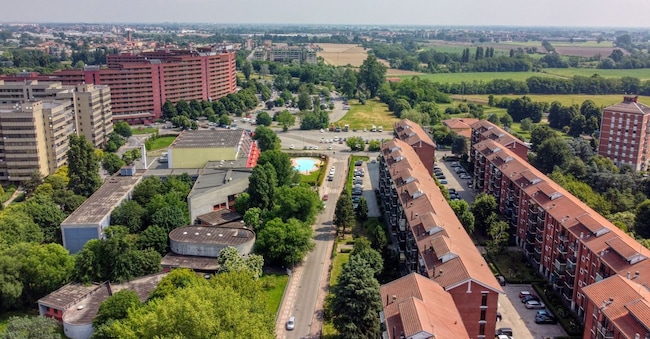
European cities are undergoing a structural transformation that affects not only the aesthetics of public spaces, but their very function. Urban greenery is no longer conceived as a decorative or residual element in relation to the built environment, but as an essential infrastructure for public health and the management of environmental risks.
This development takes place in a context marked by rising urban temperatures, intensifying heat waves and increasing soil sealing. In many cities, asphalt and artificial surfaces are gradually giving way to solutions based on permeable soils, diffuse trees and continuous ecological corridors, in an attempt to rebuild a balance between buildings and natural systems.
Defining this transition more precisely is the so-called "3-30-300" rule, an indicator increasingly used in urban policies and analysed in a study recently published in Nature Communications by the European Commission's Joint Research Centre. The principle is simple in its formulation, but ambitious in its implications: every citizen should be able to see at least three trees from their home, live in a neighbourhood with at least thirty per cent tree cover and have access to a green area within three hundred metres.
However, the analysis, which involved 862 European cities, paints a picture that is still far from these objectives. Only 13.5 per cent of Europe's urban population lives in areas that meet all three criteria at the same time, while about one fifth meet none of them. The most relevant fact is not only quantitative, but territorial: the quality of urban green spaces still follows a profoundly unequal geography.
North to the South
Northern European cities are on average more advanced. In Helsinki and Stockholm, proximity to green spaces is now an integral part of the urban structure, with more than three quarters of the population living within 300 metres of a park. Berlin and Warsaw also show high levels of tree coverage, close to over 70% of residents. But even in these virtuous contexts internal inhomogeneities emerge, with significant differences between neighbourhoods.


