
Renault seeks new partners in China: talks with Xiaomi and Li Auto
Auto China 2024 in Beijing the scene of contacts between French manufacturer and Dragon players. De Meo: Europe in a difficult balancing act
3' min read
Le ultime da Radiocor
***Iran: Pakistan, al via domani colloqui tecnici in Svizzera
*** Trump: Meloni, mia popolarita' dipende da capacita' di difendere interesse nazionale
Iran: comando militare annuncia chiusura Hormuz dopo attacchi Israele in Libano (RCO)
3' min read
China's automotive industry is getting closer and closer to Europe. Taking advantage of the Beijing Motor Show (25 April to 4 May), many Western and Japanese manufacturers have been looking for deals to start collaborations with leading local companies. From German manufacturers, already very present in China, to Toyota to Nissan. The foreign biggies have historically dominated the market in the Dragon since the 1990s, but the balance of power is now reversed: the overall market share (cars with internal combustion engines plus electric cars) has fallen from 57% to 48% between 2021 and 2023. And among electric cars alone, the balance has shifted even more in favour of Chinese brands, which dominate the top ten, with BYD (over 30% of the market) clearly ahead of Tesla.
Among the incumbent manufacturers, Renault, in particular, held talks with Li Auto and Xiaomi. The subject of the discussions was electric and intelligent vehicle technologies, said the transalpine group.
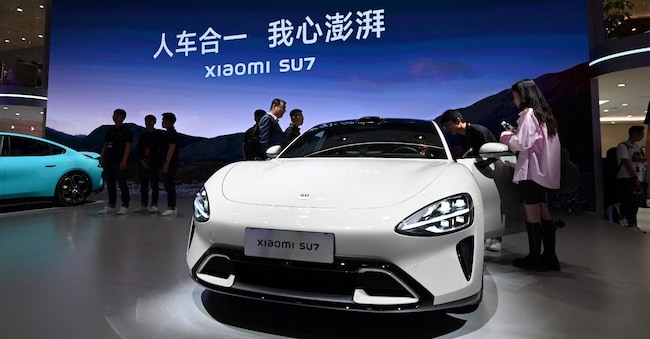
The hypothesis is of potential partnerships with the two companies. "Our ceo Luca de Meo has engaged in key conversations with industry leaders, including our partners Geely and Dongfeng, key suppliers, but also new players such as the founders of Li Auto and Xiaomi Technology," wrote Renault's head of purchasing and partnerships, François Provost in a post on LinkedIn. Xiaomi has been the big player in recent weeks with its unique and brand new SU7 electric car, which has recorded a record of orders.
The talks at the Beijing Auto Show are part of a context of rather tense relations between Europe and China. For months, the European Commission has been investigating allegations that Chinese exports are being supported by unfair billionaire state subsidies, which would artificially push the accelerator of price competitiveness. Sales of cars produced by Chinese brands are estimated to increase by 1% to 5% market share in just three years (2021-2024) by the AlixPartners Global Outlook intra-annual, presented this week.
According to the Kiel Institute for the World Economy, Chinese government subsidies to local industries are up to nine times higher than those granted by leading EU and OECD countries such as the US or Germany. Among the biggest recipients of Chinese state incentives would be the leader in electric cars (battery and plug-in hybrids), BYD, which in 2022 alone would receive some EUR 2.1 billion from the Beijing government. State aid rose from 220 million in 2020 to 2.1 billion two years later, according to the study published on 10 April by the German institute. China obviously rejects these theses and figures, and even accuses Europe of protectionism.


