
Setback for renewables: new installations down
3.5 billion euro extra costs avoided thanks to green production, but by 2025 new plants will be down across Italy. Renewable energy meets only 18% of demand

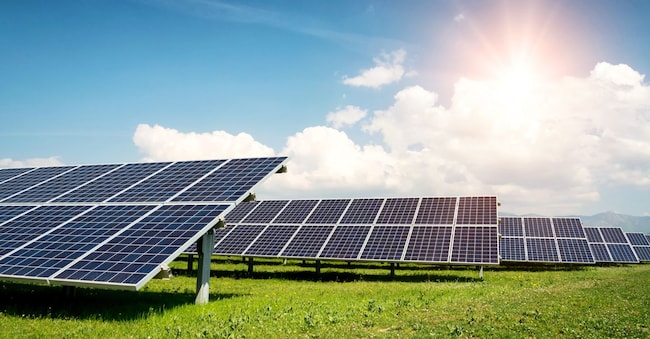
In 2025, new installations of renewables in Italia fell for the first time, from 7.5 to 7.2 GW, after years of progressive growth, marking a drop of four percentage points. A setback that precedes the energy crisis triggered by the US and Israel's attack on Iran, the effects of which will only be seen in the coming months. Making predictions is difficult but, as European Commission spokeswoman Anna-Kaisa Itkonen said last week, "we should have no illusions: this crisis that is affecting high energy prices will not be short-lived".
Savings
The public debate alternates between rumours of energy austerity, a return to coal, and extradition on the passage of supplies through the Strait of Hormuz. In this context, data from the CIRO platform - updated to 2025 by the Italy for Climate network and provided exclusively to Il Sole 24 Ore on Monday - show that renewable energies have already enabled the country to avoid 3.5 billion euros a year in additional energy costs.
Thanks to the doubling of installed power between 2008 and 2024 (from 24 to 51 GW) and the increase in electricity production from renewables (from 54 to 112 billion kWh), Italia managed to cut the share of its energy needs met by imports from 83 to 76 per cent. This is, in concrete terms, more than 30 million barrels of oil or 5-6 billion cubic metres of natural gas less each year. "The current situation shows us the spiral of energy dependency: oil and gas are concentrated in the hands of very few countries and supplies are threatened by new conflicts. Renewables are one of the keys to improving energy security and stabilising energy prices,' explains Andrea Barbabella, scientific head of Italy for Climate.
The regional map
According to monitoring by Italy for Climate in 2025, new photovoltaic installations guaranteed an additional electricity production of 9 billion kWh, but the map of renewables travels at very different speeds across the country.
The report analyses the progress of the regions in achieving the targets set by the decree on eligible areas to be reached by 2030 (Annex C, Decree 175/2025): Lazio as of 31 December 2025 leads the ranking for new renewable plants (+129% increase in megawatts installed in the last five years) and stands out in the progress towards the targets (it has already installed more than half - 56% to be exact - of the overall 2021-2030 target).

