
Renewables generate more electricity than fossil fuels in Europe in 2025
The figure emerges from the European Electricity Review by the energy think tank Ember. Italy is still among the most gas-dependent countries, but could improve thanks to batteries

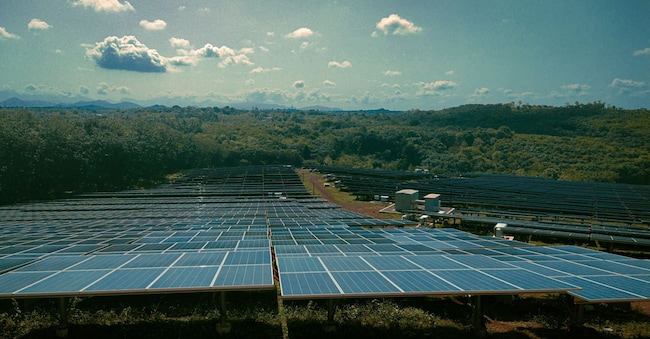
Energy, for the first time in 2025 wind and solar generated more electricity (30 per cent) in the EU than fossil fuels (29 per cent). This is the figure that emerges from the European Electricity Review published by the energy think tank Ember, according to which, despite the strong acceleration on the transition, Italy is nevertheless together with Germany among the countries most affected by the costs of imported gas, but could benefit from the development of batteries.
Solar increase
Driving the overtaking of renewables over fossil fuels in 2025 was the rise of solar power, up by more than a fifth (+20.1%) for the fourth year running, which reached a record 13% of EU electricity production, overtaking coal and hydro. The increase was widespread across the Twenty-Seven: in Hungary, Cyprus, Greece, Spain and the Netherlands, photovoltaics accounted for over a fifth of electricity, while in Italy the share rose 24% in one year to 17%.
Wind power remained the second largest source of electricity in the EU, also at 17%. Overall, the report notes that renewables generated 48% of European electricity, despite 'atypical' weather conditions that penalised hydro (-12%) and, to a lesser extent, wind (-2%), favouring solar instead.
Gas addiction
"This historic breakthrough shows how quickly the EU is moving towards an electricity system powered by sun and wind," points out author Beatrice Petrovich, emphasising that "just as fossil dependency contributes to geopolitical instability, the stakes of the transition to clean energy are clearer than ever.
Electricity generation from gas is also on the rise (+34 TWh, +8% over 2024), mainly to compensate for the decline in hydropower, although it remains 18% below pre-crisis energy levels. The cost of gas imports for electricity generation reached EUR 32 billion, 16% above 2024: the first rise since 2022, with Italy and Germany among the most exposed countries. Finally, coal continued its rapid decline, falling to an all-time low of 9.2% in 2025.

