Corporate Management

Resilience strategies and social responsibility in a conflict context: the case of Heineken in Congo

Heineken responded to the crisis in Congo by suspending activities in dangerous areas, protecting employees, social investments and constant monitoring, while maintaining operations in safe regions

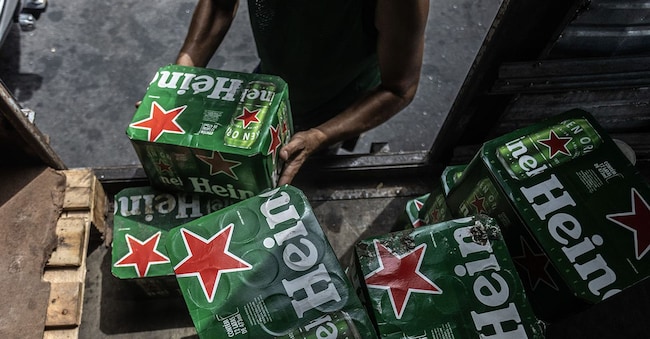
Addetti alle consegne scaricano casse di birra Heineken da un camion. (Fotografo: Dado Galdieri/Bloomberg)

6' min read

6' min read

A Reuters news agency note of 21 June reported that Heineken had lost control and withdrawn its staff from its facilities in the conflict-affected areas in the east of the Democratic Republic of Congo.

Almost 14% of Heineken's total revenues come from its activities in the Middle East and Africa, where Congo - with a population of over 100 million - is an important market.

Loading...

The drinks giant had already announced in March that its operations in three eastern cities - Goma, Bukavu and Uvira (which accounted for about a third of Heineken's business in Congo) - would remain suspended until it was safe to reopen them, after some of its factories were hit and its warehouses looted during clashes between the army and rebels.

But on Friday, 20 June, the brewer stated that the situation had deteriorated further and that armed personnel had taken control of its facilities in Bukavu and Goma - the two largest cities in eastern Congo, now under rebel control - and surrounding areas.

"The conditions necessary to operate responsibly and safely are no longer in place and, as of 12 June 2025, we have lost operational control. The safety and well-being of our employees is our top priority. We have withdrawn all remaining staff from these sites and have continued to support them financially," the statement reads.

The shutdown caused a significant economic impact, exacerbating price increases and also interrupting the public water supply linked to industrial collaboration. The effect on employment was also heavy, considering that the closed factories employed about a thousand people each, both direct and indirect.

Since the beginning of 2025, the March 23 Movement (M23) insurgency, backed - according to UN and Congolese government sources - by Rwandan military and logistical support, has intensified its fight in the east of the country, conquering Goma (North Kivu) on 26 January and then advancing towards Bukavu.

The M23, together with Rwandan forces, exercises control over strategic mineral deposits (coltan, cobalt, lithium) and imposes taxes of up to 15-20% to finance the insurgency.

The new phase of war has caused a massive exodus: over 7 million internally displaced persons, hundreds of thousands around Goma and Bukavu alone. Human rights violations reported by the UN include summary executions, child recruitment and atrocities by the M23 and Rwandan forces.

There are ongoing diplomatic mediations, led by the US and Qatar. On 27 June in Washington, an agreement was signed between the Democratic Republic of Congo and Rwanda (without M23) providing for the withdrawal of Rwandan troops within 90 days and joint security mechanisms. Several African nations and regional bodies, including the SADC and the African Union, are demanding an immediate ceasefire. The US, through the Trump- and Rubio-led brokerage, is aiming for stabilisation by offering investments in Congo's mineral resources. The M23 and the Congolese government returned to negotiations in Qatar under US pressure and, on 19 July, signed a declaration in Doha aiming for a ceasefire in eastern Congo. The African Union considers this agreement an important step towards peace. However, issues such as the withdrawal of rebel troops and the reopening of banks in rebel-occupied areas (including Goma) remain unresolved.

According to statements made on 21 and 22 July by both sides, a comprehensive peace agreement is expected by 18 August. In fact, the war continues in North Kivu and clashes are reported in all key areas in the east of the country.

So, despite diplomatic steps, the situation does not seem to be evolving and concern remains that the conflict will spread. The success of the Washington agreement could trigger foreign investment, but only an inclusive solution will guarantee lasting stability. Peace depends on the concrete participation of M23 and the actual withdrawal of Rwandan troops. Acknowledging atrocities and strengthening governance over the management of mineral resources will be essential. In this regard, a recent UN report denounces illegal export of mining products on a large scale through Rwandan entities, such as Boss Mining.

The war context we have described, in an area that has less international visibility than other ongoing conflicts, once again demonstrates the systemic vulnerability of the global Supply Chain at this moment in history. Entire supply chains can break down, undermining the very ability of companies to operate.

On the other hand, the operating model of the sector in which Heineken operates, due to its intrinsic production characteristics, costs and logistical constraints, is typically regionalised: it progressively abandons imports and develops production in consumer markets often through partnerships in the territory, local logistics and proximity supply chains. This allows for greater control and flexibility. And it also makes it possible to circumscribe and manage the impacts of disruption.

In fact, if we analyse how Heineken organised, through its local brewery Bralima (owned by Heineken since 1986), its presence and activities in the territory, and what were the countermeasures to the closure of the facilities in eastern Congo, we better understand the model strategy and contingency plan put in place in the circumstance.

Modernisation and production efficiency as leverage for a revival after critical phases

The group owns four breweries in Congo, where it produces Heineken beer and other popular brands such as Primus. The multi-year expansion plan, which started in 2020, allocated USD 11 million over five years for Bralima to install bottle reuse lines and modernise facilities, particularly in Kinshasa. Further investments aimed at improving production capacity - including through the integration of local supply chains - and increasing operational sustainability.

Valorisation of local supply chains to generate development and economic autonomy

Over the years, Bralima has developed a local rice supply chain by working with six agricultural cooperatives in the Ruzizi Plain (Bukavu), thus ensuring the purchase of approximately 1 500-3 000 tonnes of rice per year. This not only ensures local raw materials, but also promotes agricultural infrastructure and management training.

Social and structural commitment: from agriculture to health and education projects

Based on corporate social responsibility and investment in local economies, Heineken aims to consolidate shared responsibility through a community support network that fosters stability, conditions for prosperity and a positive corporate reputation.

It has also favoured public-private partnerships: thanks to the support of Agriterra (an international organisation for cooperative development in agribusiness) and banking institutions, cooperatives have obtained credit and autonomy, reducing risks and costs. In addition, Bralima, through the Heineken Africa Foundation, invests in prenatal health, AIDS and education programmes, as well as infrastructure projects in fragile areas.

Crisis Adaptation: Plant Protection, Territorial Diversification and Logistics Presence

Heineken has worked on a historical multi-site presence and widespread distribution to ensure operational resilience in an unstable environment. In a country with limited infrastructure, Bralima has developed a long-term industrial vision and an ability to adapt even in times of crisis. As active security, it employs a private company (Top SIG) to protect the plants against theft and threats. In any case, the closure of some production hubs for security reasons can be compensated for by operational activities in secure areas, with the ability to resume where possible in a short time. Then, an effective logistics network - including waterways - ensures flexibility in deliveries.

Strategic continental outlook, with replicability of the model in other African countries

Heineken's regional ambition is evident in similar models of agricultural integration and sustainable innovation that are also implemented in neighbouring countries (e.g. Rwanda), making Bralima part of a broader development strategy in East Africa.

Contingency Plan

As the conflict escalated, operations at the Bukavu and Goma factories had already been suspended in March due to damage sustained during clashes and looting. On 12 June, the company then evacuated all employees from the areas at risk, while continuing to support them financially through guaranteed funds even without operations and carrying out regular checks of staff in the early stages of the conflict to ensure they were safe in their homes.

Today, Bralima continues to run its other facilities in Congo not affected by the conflict, continuously monitoring the situation with a view to the possibility of resuming production at the other plants.

In summary, Heineken responded to the crisis in the east with a clear strategy: to suspend itself completely in the most dangerous areas, to protect and support employees, to continue operations in the other regions of Congo and to keep the situation monitored with a view to possible reopening when safe conditions return.

*Senior Executive Advisor - EY Business Consulting

Copyright reserved ©
Loading...

Brand connect

Loading...

Newsletter

Notizie e approfondimenti sugli avvenimenti politici, economici e finanziari.

Iscriviti