
Restricted Traffic Zones: in Italia, the rules vary from city to city
The Luiss Business School’s Car and Mobility Observatory highlights the differences between our system and those of other European countries

Key points
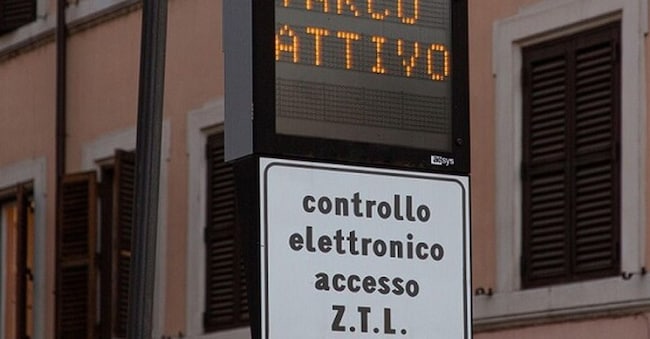
In some cases, it is a way of avoiding so-called ‘congestion’ in historic town centres. In others, it is a means of reducing emissions. What is certain is that the number of restricted traffic zones is by no means small, and they can be found everywhere from small villages to large cities. According to the study ‘Cars and Cities, Beyond the Ban’ by the Car and Mobility Observatory at the Luiss Business School, of which Unrae is a partner, Italia is the European country with the highest number of ZTLs and accounts for over half of the urban traffic restrictions on the continent.
The survey
The survey, presented in Rome, analyses the relationship between private transport and urban space in light of new environmental, economic and social requirements. According to the study, of the approximately 500 restricted traffic zones (ZTLs) in operation across the continent, as many as 446 are located in Italia. In total, our country has 485 restrictions, including LTZs, Low Emission Zones (LEZs) and congestion charging schemes, accounting for 56.2% of the European total. Whilst traffic regulation measures help to reduce emissions and congestion, the research highlights significant regulatory fragmentation.
A comparison with other countries
Then there is the comparison with other European countries. For example, as the research shows, unlike France, Spain and Germany, which apply uniform national criteria, in Italia the rules and procedures for access vary significantly from city to city.
As highlighted by Fabio Orecchin, director of the Car and Mobility Observatory at Luiss Business School, the research shows that “Italia pays great attention to the issue of urban mobility, but the lack of effective coordination at national level is evident”. Furthermore, according to the director, common standards are needed both for low emissions and ‘a national platform capable of gathering all information on local restrictions’.
Incentives
Another point highlighted by the study is that containment and restriction policies are more effective if ‘accompanied by incentives to renew the vehicle fleet and by an expansion of public transport, so as to combine environmental sustainability with social equity’. According to Roberto Pietrantonio, president of Unrae, “today we are witnessing a sort of balkanisation of mobility: rules and restrictions that vary from city to city generate confusion and uncertainty. The best cities’, he adds, ‘will be those capable of reconciling sustainability, inclusion and freedom of movement’.

