The report

Retail: fewer staff but higher turnover – here are the sectors where operational efficiency is on the rise

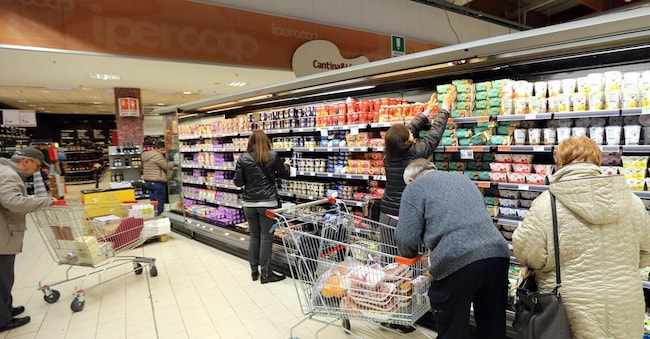
According to the Confcommercio report, between 2018 and 2025 the number of shops in Italia fell by over 14 per cent and the number of employees by 1.8 per cent. Over the same period, the sector’s turnover increased by 25.7 per cent. This growth is being driven by discount food retailers (a 101.1 per cent increase in turnover), pharmacies, and the sale of ICT products, household goods and personal care products.

4' min read

Translated by AI
Versione italiana

4' min read

Translated by AI
Versione italiana

Despite the decline in the number of people employed in retail outlets – which fell from 1,904,871 in 2018 to 1,871,104 in 2025 – the sector’s turnover, over the same period, soared by 25.7 per cent, rising from 326.8 to 410.7 billion euros.

Between 2018 and 2025, the number of retail outlets across Italia also fell, dropping from over 666,000 in 2018 to around 570,000 in 2025 – a reduction of 14.4 per cent. This decline in high street retail has particularly affected small, locally rooted businesses, such as small grocery shops and outlets specialising in cultural and leisure goods, whilst pharmacies are an exception (+4.2 per cent). There has also been a sharp decline in the number of businesses such as newsagents, bookshops, stationers, toy shops and music shops.

Loading...

This is the finding of Confcommercio’s first report on trade in Italia, compiled by the confederation’s Research Department.

The decline in the number of retail outlets

Non-specialist retail outlets – hypermarkets, supermarkets and mini-markets, food discount stores, department stores and general merchandise stores, and large technology retail outlets – have fallen from 59,802 in 2018 to 54,708 in 2025, representing an overall decline of 8.5 per cent. Within this category, mini-markets suffered the sharpest decline, falling from 26,847 to 22,043 (-17.9 per cent), whilst discount food shops, hypermarkets, department stores and general stores have increased in number by 7.4 per cent, 1.6 per cent and 1.1 per cent respectively.

However, according to the Confcommercio report, the decline has been more pronounced among specialist retailers, such as small food shops, petrol stations and tobacconists, small ICT shops, shops selling home and personal care products, cultural and leisure goods, clothing, footwear, jewellers and chemists. Overall, these businesses have fallen by 14.3 per cent over seven years, from 496,701 in 2018 to 425,874 in 2025. Only the number of pharmacies has increased, whilst shops selling cultural and leisure goods have actually fallen by as much as 21.9 per cent.

The fall in the number of employees

The number of people employed in these sectors also fell over the period under review, but by a more modest 1.8 per cent. As for non-specialised retail outlets, there was an overall increase in the number of employees of 4.1 per cent (from 492,199 to 512,497), with a veritable boom in discount food shops (+51.2 per cent).

Specialist shops, on the other hand, saw a 2.4 per cent fall in the number of employees, with the sharpest decline recorded in the fuel and tobacco sector (-17.2 per cent). The overall loss of jobs was partly due to the poor performance of street traders, who recorded a decline of more than 25 per cent.

According to the report, however, the decline in the number of shops does not automatically translate into a fall in overall employment. On the contrary, in several sectors there has been an increase in the number of employees despite the decline in the number of outlets. This is the case, for example, with supermarkets and large retail outlets selling technology goods, which between 2018 and 2025 are set to see an 8.3 per cent increase in the number of employees despite a marked decline in the number of shops. Even within the specialist retail segment, shops selling clothing, footwear, jewellery and other related categories are showing positive employment trends (+3.4 per cent), despite a reduction in the overall number of outlets.

The increase in turnover

Numerous sectors, however, are showing significant revenue growth, confirming, as the report explains, ‘that there is scope for growth for businesses capable of responding to changes in demand and consumption patterns’.

Among specialist retailers, pharmacies stand out in particular, having recorded a 43.5 per cent increase in turnover between 2018 and 2025. But that is not all. Despite a decrease in the number of outlets of 15 per cent and 6.4 per cent respectively, turnover is rising for shops selling household and personal care products (+28.0 per cent) and for specialist ICT retailers (+25.5 per cent).

Loading...

Although these changes are expressed in current values, a comparison with the trend in the Consumer Price Index (CPI) shows that, across all these sectors, turnover growth has nevertheless outpaced inflation. Among non-specialist retailers, the performance of discount stores stands out in particular: whilst the growth in the number of outlets remained at 7.4 per cent, their turnover more than doubled between 2018 and 2025 (+101.1 per cent).

More generally, non-specialist retailers have seen a 36.5 per cent increase in turnover between 2018 and 2025, rising from 120 to 150 billion euros, driven not only by discount food retailers, supermarkets (+22.4%, despite a 3.6% decline in the number of outlets). Turnover is also rising sharply (+12.3%) for mini-markets and large electronics retailers (+9.6%), despite a fall of 17.9% and 4%, respectively, in the number of outlets.

As regards specialist shops, turnover has risen over seven years from 186.0 billion euros to 234.8 billion, representing an increase of 26.3 per cent. Small food shops stand out (+28.4 per cent despite a 17.9 per cent decrease in the number of outlets), as do clothing, footwear and jewellery shops (+26 per cent despite a fall in the number of shops of over 15 per cent).

Furthermore, turnover per employee is set to rise between 2018 and 2025 in almost all the cases considered, with the exception of shops selling cultural and leisure goods (-4.9 per cent).

Improving operational efficiency

“Although these figures are expressed at current prices, this trend suggests a general improvement in operational efficiency and labour productivity, consistent with the rationalisation and consolidation processes within the retail sector already highlighted,” explains the Confcommercio report.

Analysing the available figures, therefore, it appears that a ‘process of selection and reorganisation’ is under way, which has led to a greater concentration of activities within, on average, more efficient firms. In this sense, these figures serve as an indicator of the commercial sector’s ability to adapt to an increasingly competitive market environment, characterised by the expansion of e-commerce and the need to invest in innovation and new technologies. The evidence analysed suggests, in fact, that a significant proportion of entrepreneurs in the sector are responding effectively to these changes’.

Copyright reserved ©
Loading...

Brand connect

Loading...

Newsletter

Notizie e approfondimenti sugli avvenimenti politici, economici e finanziari.

Iscriviti