

Back to school for 54,000 coeliacs: the rules for the ‘gluten-free’ canteen
20 per cent of people diagnosed in Italia are school pupils: here’s how to ensure they have a safe and informed approach to school meals

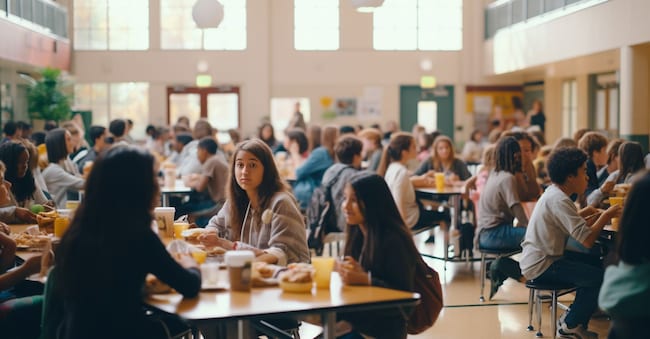
September marks a return to school and to everyday life – comprising canteen lunches, break times, school trips and activities with classmates – for over 34,000 pupils with coeliac disease in nursery, primary and lower secondary schools, accounting for around 13 per cent of those diagnosed in Italia (Ministry of Health 2024). Added to this number are over 20,000 students (7 per cent) in upper secondary schools who, although they do not use the canteen, share social moments with their classmates. For all of them, returning to the classroom means being able to rely on proper management of coeliac disease and a gluten-free diet, so that they can enjoy school life safely and with peace of mind.
A treatment, not a diet
The proper management of coeliac disease is based on the principle that a gluten-free diet is a form of treatment, not a fad: to date, it is the only available treatment, which must be strictly followed for life and only after a medical diagnosis. Furthermore, as well as eliminating gluten, it is important to choose foods of good nutritional quality, prioritising a varied and balanced diet alongside products suitable for coeliac disease.
Eating together safely
In schools, the issue of food safety is closely linked to that of inclusion: the canteen must ensure a safe meal whilst allowing pupils to enjoy their lunch together without any distinctions. According to the latest figures from the Ministry of Health’s Report to Parliament, there are 33,027 canteens in Italia – of which 22,972 are school canteens – that have provided gluten-free meals to coeliacs who have requested them.
For students with coeliac disease, the canteen is one of the most challenging environments, where safety depends not only on gluten-free food but also on how the service is organised: staff in school kitchens and catering companies must prevent the risk of cross-contamination through precise production, cleaning and service procedures, as well as staff training on coeliac disease. In Italia, all this is made possible by Law 123 of 2005, strongly championed by the Italian Coeliac Association, which guarantees the right to a gluten-free meal in public canteens – 70 per cent of which are school canteens – and provides annual funding for the organisation, training for food sector operators and raw materials.
Focusing on independence
As well as safety, there is the psychological aspect: the gluten-free menu must not be perceived as ‘different’, and every pupil must be able to eat balanced, high-quality meals whilst avoiding separate tables; at the same time, it is important to be mindful of risky behaviour, such as pupils ‘tasting’ each other’s food.

