

Getting back to skiing after an injury: recovery starts with preparation

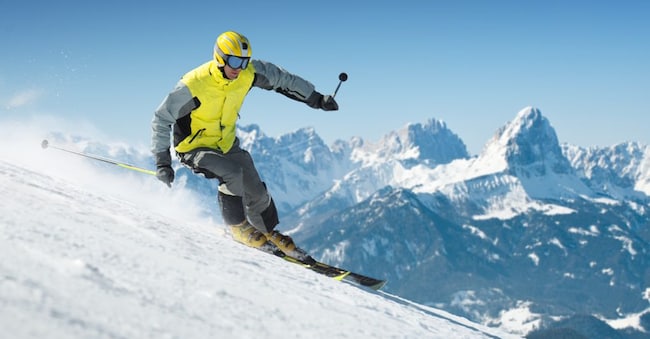
When is the right time to get back on the slopes after an injury? There is no fixed date on the calendar. A return to sport depends on the type of injury, the recovery of joint and muscle function, and the athlete’s ability to once again cope with the stresses typical of skiing. This assessment takes time and is often longer than the athlete themselves expects, especially for those who are used to gauging their physical condition based on how they feel, rather than on objective parameters.
Dr Andrea Panzeri, head of of the Sport Trauma and Research Centre at the San Siro Clinical Institute of the San Donato Group and chairman of the Medical Commission of the Italian Winter Sports Federation (FISI), frames the issue in terms of a journey rather than a deadline. Returning to skiing after an injury must be seen as a journey. Every injury has its own characteristics and every person responds differently: this is why recovery must be tailored to the individual athlete’s needs.
Clinical recovery and a return to sporting activity, in other words, do not automatically coincide.
Why tissue healing is not enough
The healing of injured tissue is only part of the journey. Skiing requires strength, balance, coordination and neuromuscular control, and the joints must be able to cope with changes of direction, variations in terrain and sudden situations during a descent.
‘A clinically healed joint,’ explains Panzeri, ‘does not mean an athlete is ready. It is necessary to verify that muscle strength, stability and reaction capacity have been restored.’ In clinical practice, this means complementing the orthopaedic assessment with more specific tests: from isokinetic dynamometry, which objectively measures muscle strength, to balance tests on a proprioceptive platform, right through to exercises that simulate the technical movements of skiing.
The most common injuries, the most varied scenarios
The combination of speed, changes of direction and sudden stresses exposes skiers to various types of injury. The knee is one of the most commonly affected areas, particularly the ligaments, which are often involved in sudden twisting movements or falls; however, the shoulder, ankle and spine can also sustain injuries, especially in the event of impacts or collisions.
Each area, however, requires a different rehabilitation programme. Following a knee injury, the focus is on muscle strength, joint stability, coordination and the ability to react to changes in movement; for the shoulder, ankle and spine, on the other hand, mobility, balance and postural control are paramount.
In any case, following surgery or conservative treatment, rehabilitation follows a progressive programme of strength training, proprioceptive exercises, simulations of sporting movements and functional assessments, tailored to the patient’s individual characteristics and the type of activity they practise.
‘A return to the slopes must be based on objective parameters,’ explains Panzeri, who outlines how clinical and functional tests enable the measurement of strength, stability and movement control, thereby reducing the risk of further injuries.
The factor that doesn’t show up on X-rays
Then there is a less measurable, but no less significant, component: confidence. Returning to skiing after an injury also means overcoming the fear of another injury. The fear of tackling a turn, higher speeds or a more challenging run can affect technical execution and, consequently, safety. This is not a minor issue: an athlete who skis hesitantly, in an attempt to compensate for their fear, may alter their movement mechanics and, paradoxically, increase the very risk they are trying to avoid. In this sense, a gradual return to skiing is not merely a physical precaution; it allows the skier to gradually regain familiarity with the sport.
Prevention begins before the snow
Just as recovery from an injury requires a structured programme, prevention follows the same logic, and ideally begins weeks before the first run. Hitting the slopes after months of inactivity increases the risk of fatigue and loss of control during the most demanding parts of the run.
‘Skiing requires specific preparation,’ confirms Panzeri. ‘Training lower-body strength, balance and proprioceptive skills enables you to cope better with the physical demands of the sport and can help reduce the risk of injury.’ Added to this are a number of practical precautions: a proper warm-up, correctly adjusted equipment, hydration and, last but not least, the ability to stop when the body signals tiredness or pain.
The Sport Trauma and Research Centre at the Istituto Clinico San Siro focuses on recovery and prevention through functional assessments, personalised programmes and applied research aimed at sportspeople, from competitive athletes to amateur skiers who, following an injury or a long break, wish to return to the slopes safely.

