Closing date by 5 February

Rio Tinto and Glencore restart merger talks over $200bn: impact on stocks and strategic challenges

The possible union between the two mining giants aims to create the world leader in copper, but must overcome operational and portfolio divergences, with immediate effects on stock markets.
Aggiornato il 9 gennaio 2026 ore 11:50

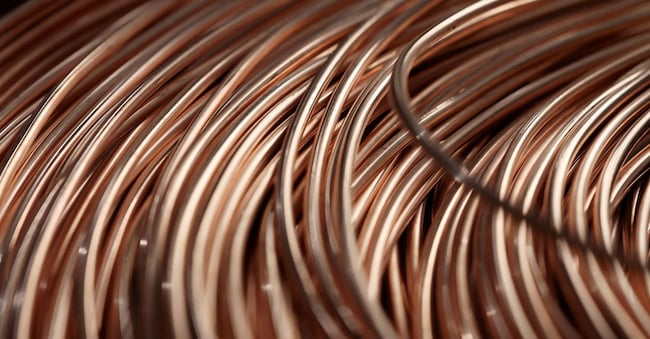
FOTO D'ARCHIVIO: Una bobina di barre di rame sulla linea di produzione di filo piatto di rame nello stabilimento Wellascent di Ganzhou, provincia di Jiangxi, Cina, 14 agosto 2025. REUTERS/Florence Lo/Foto d'archivio

4' min read

Translated by AI
Versione italiana

4' min read

Translated by AI
Versione italiana

Rio Tinto and Glencore are resuming negotiations for a maxi merger that would create the world's leading mining company. The possible transaction would have a total value of USD 200 billion (the Financial Times estimates the enterprise value at over USD 260 billion).

The merged group swould overtake rival Bhp, currently at the top of the world rankings, with a particular focus on the production of copper, a material that is crucial for the energy transition and whose prices are at an all-time high. However, as Bloomberg recalls, several analysts (see below. ndr) have also pointed out the difficulties of a merger between the two groups.

Loading...

ùOne of the elements is coal production, a sector in which Glencore is the leader while Rio Tinto has abandoned it. Previous negotiations had started in 2024 only to founder months later due to differences over valuations.

Glencore flies on the London Stock Exchange

Glencore soars on the London Stock Exchange after confirmation of talks with Rio Tinto on a merger that would lead to the creation of the world's largest mining group. At 13.30 the Glencore share rose 10.30 per cent to 451 pence, taking the top spot in the Ftse 100 and also in the Stoxx Europe 600.

Rio Tinto, by contrast, gave up 1.8% to 6082 pence.
Other mining stocks also shone, such as Endevour Mining (+4.8%) and Antofagasta (+3%).

In its statement today Rio Tinto specified that the transaction could include 'the combination of some or all of the activities' of the two groups, 'including a merger entirely through a share swap' between the two entities.

"The current expectation of the parties is that any merger will be completed through Rio Tinto's acquisition of Glencore through a court-approved agreement," Rio Tinto added, echoing a statement from Glencore.

'There is no certainty that an offer will be made, nor on the terms of such an offer, should it be made,' Rio Tinto also stated.

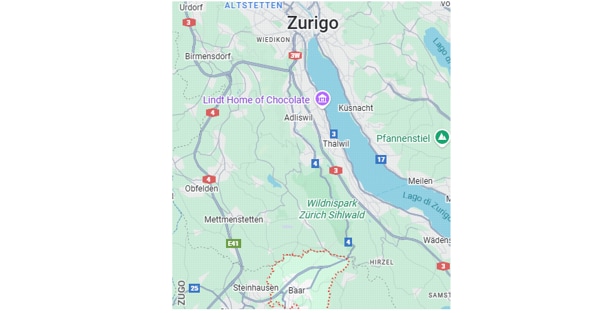
The company has until 5 February to announce its firm intention to submit a bid for Glencore, which is based in Baar, Switzerland.

Baar

Sede di Glencore

Even Glencore has made it clear that there is no certainty as to whether an agreement on the terms of a transaction or offer will be concluded, nor as to the structure or modalities of such an agreement, should it be completed.

At Thursday's stock market prices, Glencore had a capitalisation of £48.8 billion, while Rio Tinto was worth £100.64 billion. As the 'Financial Times' points out, the merger would result in the creation of the world's largest mining group, with an enterprise value of around $260 billion, and would take place at a time when 'the copper rush is transforming the industry'.

The recent amicable merger of Anglo American and Canada's Teck Resources has put pressure on rivals such as Bhp and Rio Tinto to increase their size in order to secure greater access to copper resources.

 Red metal prices hit a record high this week at over $13,300 a tonne, while analysts warn that up to 10 million tonnes could be missing from the market by 2040.

Glencore is the world's sixth largest copper producer. Its expansion plans include the development of a new copper mine at El Pachon in Argentina and could take the group to produce 1.6 million tonnes per year by 2035, double current levels.

In December, CEO Gary Nagle stated that Glencore wants to become "the world's largest copper producer".

The group restructured its vast coal operations into a separate entity, in a reorganisation that could lead to the spin-off of the sector and make a merger with Rio Tinto easier.

A mega-merger that failed a year ago

"Glencore confirms that it is in preliminary discussions with Rio Tinto regarding a possible combination of some or all of their respective businesses, which could include an all-stock merger between Rio Tinto and Glencore," the company said on 8 January 2026 in a note.

Rio Tinto, the world's largest iron ore producer, has a market capitalisation of around USD 142 billion, while Glencore is valued at USD 65 billion.

Glencore had contacted Rio Tinto in 2024 to evaluate a combination between the two major copper producers, but the talks were short-lived.

The Analysts

It is surprising that Rio Tinto chose to restart negotiations with Glencore, given that its recent message to investors emphasised simplicity, says Prasad Patkar, head of qualitative investments at Platypus Asset Management. Platypus has no holdings in either stock.

'If the merger materialises, management and the board of directors will have to deal with the great complexity that comes with every major M&A transaction,' says Patkar.

The union of Rio Tinto and Glencore could be complex, but Jefferies believes "there is a significant value creation path for both". One possibility is for Glencore to carve out its coal business and then sell to Rio at a significant premium, analysts say. This could result in significant cost advantages, including marketing. The combined company would be the first miner in the world by market value and would hold valuable assets in iron ore, aluminium and copper, with a strong pipeline of growth options for copper.

Another possibility is that the companies merge their iron ore and coal businesses into a single company listed in Australia, and then separately list their base metal businesses. According to analysts, this solution 'could have problematic tax implications and would be difficult to structure'. They also question whether BHP could emerge "as a potential interloper".

 Copper is at the centre of merger talks between Rio Tinto and commodities giant Glencore, write Richard Hatch and Jasper Mainwaring of Berenberg. Glencore has already taken steps to prepare less attractive units for the spinoff, they note. The coal and ferroalloy units have been placed in a separate vehicle that could be divested. Getting rid of these assets would give the combined Rio-Glencore entity an interesting decarbonisation story, while increasing its exposure to copper. Rio Tinto has long since divested its coal business with a view to decarbonisation, they add.

Copyright reserved ©

Brand connect

Loading...

Newsletter

Notizie e approfondimenti sugli avvenimenti politici, economici e finanziari.

Iscriviti