

Wild west risk in the ward: few checks on doctors and nurses from abroad. Schillaci: 'Rules now'
A derogation from Covid that allows regions to recognise non-EU qualifications in a simplified way is in force: there are thousands of practitioners not certified by the Orders

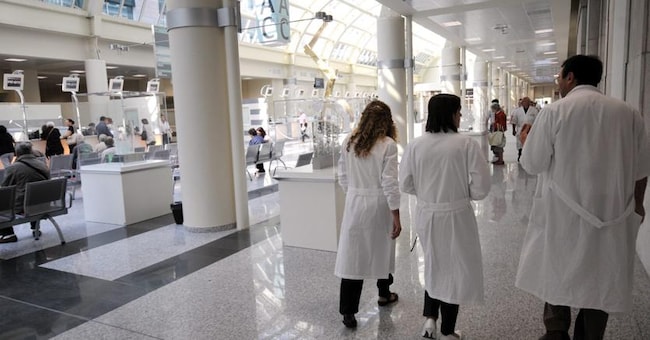
"We have defined a punctual discipline for the verification of qualifications in order to make it structural, overcoming the emergency one born with Covid. Comments from the regions were also incorporated and that text has been under consideration by the State-Regions Conference since April 2024. It is clear that it would be desirable to conclude the process of this agreement to protect the professionalism of health workers and above all the health of citizens'. From Health Minister Orazio Schillaci, questioned by Il Sole-24Ore, comes a strong input for clear rules capable of putting an end to the Far West in the recognition of the qualifications of non-EU operators who come from abroad to work in Italy. And which our country, which estimates a shortage of 70,000 workers for nurses alone, desperately needs.
The loosening of the criteria for admitting to the ward those arriving from outside, introduced with the pandemic (Cura Italia decree) and then extended due to the shortage of domestic resources, is destined to continue until 2027, and meanwhile the State-Regions agreement with which the Bollette decree called for the regulation of the recruitment of doctors, nurses, physiotherapists and foreign OSSs is blocked by regions such as Lombardy, the scene of the latest news event at San Raffaele in Milan, which has rekindled the spotlight on the critical issue of patient safety when entrusted to staff with dubious training. These staff members - alongside many others who follow the standard procedure for recognition of their qualifications - practise 'by way of derogation', configuring a scenario in Italy with 'A' and 'B' doctors and nurses: the former are registered with the order and therefore traceable, required to attend training courses and take out insurance policies; the latter are unaware of the language and therefore limited in their dealings with colleagues and patients, with an unverified and possibly inadequate educational background, which leads them to confuse drug dosages or make incorrect assessments. A potentially explosive mix that turns the 'derogation' into a loose cannon.
The State-Regions Agreement on stand-by, first because of Calabria's impasse to hire Cuban doctors and then because of Lombardy's stop, which last September saw the Regional Administrative Court reject its own resolution simplifying the procedure for recognising qualifications. "For nurses alone we estimate 15,000 non-certified presences," explains Barbara Mangiacavalli president of the National Federation of Nursing Orders (Fnopi). As subsidiary bodies of the State, we are willing to collaborate with the institutions to guarantee quality and appropriateness: we gladly take on the task of recognising the titles of these people, of putting them on an ordinary pathway and of monitoring them from the deontological, language and skills points of view'. In short, the watchword is OK for staff to arrive from abroad as long as they are regular: they already come from India, Eastern Europe, some African countries and South America. Many realities, such as Latin America and India, have training courses similar to ours, but to practice in Italy in any case the problem of language and ethical recruitment standards must be addressed. As Ireland does, which has 50% of foreign nurses: first it makes them study English, then it proceeds with the certification of skills and with inclusion in a company system, including welfare with family reunions.
Italy confirms itself under the banner of pushed regionalisation: for example, in Lombardy, at the proposal of Welfare Councillor Guido Bertolaso, the collaboration with Uzbekistan on nurses has begun. The project provides for clinical and theoretical training courses at the Asst Fatebenefratelli-Sacco in Milan. The first 10 nurses are already there, but in the first months of 2026 the aim is to have 210 arriving, who are already learning Italian in Tashkent and Samarkand.
On the whole, since 2020, with the Cura Italia and Ukraine Decrees, almost 19,000 nurses and 9,000 doctors would have entered our country, mostly recruited in the private sector. 'They are a structural resource for our healthcare system and should not be considered second-class,' warns Foad Aodi, president of the Association of Doctors of Foreign Origin in Italy (Amsi), which keeps track of the entries and exits. We ask them to be valorised with rapid paths of title recognition, language training, updating and inclusion'. However, 'the time has come to close all regulations that provide for derogations,' Mangiacavalli finally warns: Italy cannot afford to rely on professionals with dubious qualifications and our patients deserve the best'.


