

Robotic surgery and AI in urology: how they are transforming care, but with the conundrum of costs
New techniques will be the focus of the Italian Society’s forthcoming Congress, but there remain a number of unknowns between the promises and their large-scale implementation

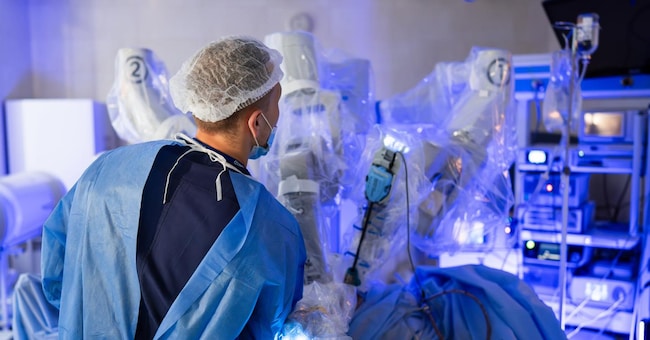
An algorithm that helps locate the tumour, a robot performing surgery thousands of kilometres away from the patient, and the ever-rising cost of new treatments. These are the topics that urology will be addressing at the congress of the Italian Society of Urology, in Riccione from 28 to 31 October. But between the promises and large-scale use, a crucial step remains: demonstrating that the tools also work outside the centres where they were developed. ‘For the time being, they remain merely a tool,’ warns Alberto Briganti, Professor of Urology at the Vita-Salute San Raffaele University and Editor-in-Chief of *European Urology*, the official journal of the European Association of Urology (EAU).
“Cancer accounts for a very significant proportion of cases in modern urology,” explains Briganti, who is also deputy director of the Institute of Urological Research (URI): “Around a third of solid tumours in adult men and women originate in the genitourinary system. Among men, prostate cancer ranks first in terms of incidence and prevalence; this is followed by bladder cancer, which ranks fifth in prevalence, and kidney cancer, which ranks eighth. However, there is a discrepancy between prevalence, incidence and mortality: if detected early, such as in the case of prostate cancer or small renal masses, these cancers have excellent long-term survival rates.” For prostate cancer, the Lancet Commission predicts that cases will double by 2040.
In the field of artificial intelligence, Briganti, who is also director of the Robotic Surgery Programme within the Urology Department at San Raffaele Hospital, is the lead author of a scoping review published in the *World Journal of Urology* which examined 47 studies. The picture remains patchy: almost all the studies come from single centres and none are randomised. One step forward is the Riders Trial, a randomised study by Francesco Porpiglia, director of the Department of Urology at the Candiolo National Cancer Institute, involving 133 patients, which compared AI-guided prostatectomy with traditional prostatectomy. ‘It is a first step towards clinical application,’ observes Briganti. He adds: ‘We are a long way from large-scale application, but we are close to practical application’ in tertiary centres with sufficient case numbers and experience. The most immediate benefit lies in predictive models, which combine clinical data, images and pathological reports to estimate what will happen after the operation: patients can be told, for example, their individual risk of incontinence or erectile dysfunction. The issue of information overload remains, as it can distract rather than help in the operating theatre: ‘It must be used in the right way.’ And there is the question of responsibility: ‘It remains with the surgeon because the software is nothing more than an aid.’
The same caution applies to telesurgery, which allows operations to be performed remotely using a robotic platform. With a suitable connection, distance is no longer a limitation: between 3,000 and 10,000 kilometres, explains Briganti, ‘it makes little difference’. The most significant cases have come from the United States and China because the main systems did not have CE marking; today there is a standardised programme in Europe too, and more than a third of studies on telesurgery come from the field of urology. The EAU policy, to which Briganti also contributed, specifies a latency – that is, the delay between a command and the robot’s response – of less than 150 milliseconds, ideally less than 100: ‘Below 100, it is almost imperceptible’. A dual team – local and remote – is also required, ready to deal with malfunctions, and responsibilities must be defined in advance. The process begins with standard procedures, such as radical prostatectomy. The biggest change, however, is not in the operating theatre. ‘The evolution lies in the therapeutic sphere,’ explains Briganti, permanent councillor of the Fondazione Amici di Uri, ‘immunotherapy and systemic therapies aim to preserve the bladder, with complete remissions in up to 50 per cent of cases, though these are still in the clinical trial phase.’
But the best treatments cost more. Briganti describes the costs as a major issue: bladder cancer is ‘one of the conditions with the highest social cost’. This is demonstrated by a systematic review of 73 studies, published in *European Urology* and authored by San Raffaele urologists Pietro Scilipoti and Marco Moschini. The data are from the US, but broadly speaking they also apply in Europe. In metastatic disease, the drugs in the new combination alone cost over 200,000 dollars for five cycles. But even in high-risk non-muscle-invasive tumours, costs can rise significantly: over five years, they can reach around $233,000 if the disease progresses after standard therapy (BCG), compared with around $95,000 if it does not progress. Another significant factor is ‘financial toxicity’, i.e. the economic impact on the patient and their family: in one study, one in four patients suffered from this to a moderate or severe degree, most often young and less educated individuals. To contain costs, the review recommends risk-adjusted monitoring and urinary biomarkers.


