

Rome, Doha and Ankara join forces in Libya as the election campaign gets underway
The pilot phase of a joint operations centre between Italia, Qatar and Turkey to manage migration flows is getting under way. Meanwhile, simultaneous presidential and parliamentary elections have been scheduled for February 2027. The next president will convene the Constituent Assembly. A unified national budget is also planned.

Key points
The Libyan issue has returned to the forefront of the Italian and international political and diplomatic agenda, with two developments which, although distinct, appear to be closely interlinked: on the one hand, the launch of the pilot phase of the joint operations centre in Tripoli; on the other, the announcement of an agreement between the main Libyan institutions to hold presidential and parliamentary elections by 17 February 2027. These two developments signal an attempt to break the current deadlock, combining cooperation on the ground with a revival of the political process. At an operational level, the Italian government has expressed satisfaction at the launch of the joint operations centre, regarded as a concrete follow-up to the Istanbul summit of 1 August 2025. The centre, formally operated by the Libyan authorities, involves local officials supported by liaison officers from Italia, Qatar and Turkey. The aim is twofold: to strengthen Libya’s capacity to manage irregular migration flows and to improve coordination in search and rescue operations at sea, as well as to intensify the exchange of information.
The formula
The approach adopted reflects a delicate political balance. On the one hand, it emphasises respect for Libyan sovereignty, an essential element for the initiative’s legitimacy. On the other hand, it establishes a multilateral platform involving actors with often divergent interests in the Libyan theatre, such as Ankara and Doha, alongside Rome, which has traditionally been engaged in the migration issue and the stabilisation of the North African country. Cooperation on a technical basis therefore also serves as a testing ground for pragmatic convergence among external partners. The strategic dimension of this instrument should not be underestimated. The management of migration flows remains, in fact, a priority for Italia, both domestically and at European level, whilst the strengthening of Libyan capabilities in the areas of SAR (Search and Rescue) and territorial control forms part of a broader approach to the externalisation and co-management of borders. At the same time, the fight against criminal networks involved in migrant smuggling constitutes a shared security concern, which justifies greater operational coordination.
The announcement
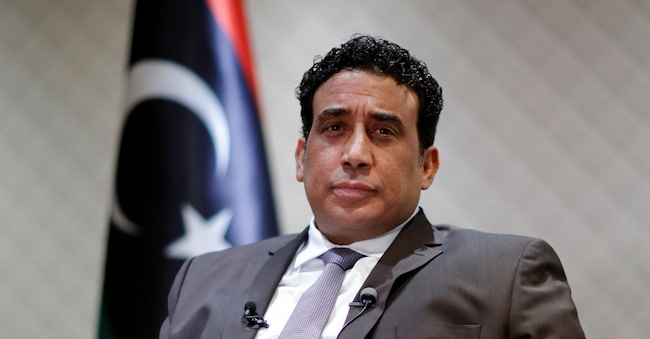
This development is accompanied by a significant political signal: the announcement, reported by Al Arabiya, of an agreement between Libya’s main institutions to organise simultaneous presidential and parliamentary elections by February 2027. The joint statement bears the signatures of the Speaker of the House of Representatives, Aqila Saleh; the President of the Presidential Council, Mohamed al-Menfi; and the President of the High State Council, Mohamed Takala, signalling a convergence between the country’s main institutional bodies. The agreement provides for the creation of a high commission tasked with overseeing the entire electoral process. The composition of the body reflects an attempt to include the main levers of power in Libya: the Governor of the Central Bank, the Chair of the National Electoral Commission, two members of the 5+5 Joint Military Commission, and representatives of the security forces from the east and west. This formula aims to ensure territorial and institutional balance, whilst at the same time highlighting the complexity of the Libyan system. On a regulatory level, the agreement includes a jointly agreed constitutional amendment, a necessary step towards establishing the legal framework for the elections. It is also envisaged that the future elected president will convene the Constituent Assembly to launch an inclusive national dialogue aimed at adopting a permanent Constitution. This is a key element, given that the absence of a stable constitutional framework has been one of the main causes of previous failures. The reference to the outcomes of the Bouznika Agreement, particularly regarding the distribution of sovereign powers and the reunification of institutions, signals a desire to revive agreements that had already been negotiated but remained largely unimplemented. At the same time, the parties reiterate a firm stance on the management of resources: there will be no release of Libyan funds frozen abroad until a president legitimised by a popular vote has been elected. The economic chapter also plays a central role. The establishment of a joint technical committee to draw up a unified state budget for 2027 represents an attempt to overcome financial fragmentation. In parallel, the National Oil Corporation’s exclusive role in the marketing of oil is confirmed – a sensitive issue in a country where control of energy resources is closely linked to the balance of power.
Convergences
Despite the positive signs, significant uncertainties remain. The success of the agreement will depend on the genuine commitment of the many political and military forces active in the country, as well as on the ability to resolve the persistent differences over electoral rules and eligibility criteria. The precedent set in 2021, when the electoral process stalled precisely over these issues, serves as a warning. In this context, the role of external actors — including Italia — could prove decisive. Rome, which maintains close dialogue with various Libyan factions and has a direct interest in the country’s stability, is well placed to support an integrated approach: to assist in strengthening Libyan operational capabilities, as in the case of the joint operations centre, whilst at the same time fostering an inclusive and credible political process. The convergence between the operational dimension and the institutional process represents, ultimately, the real challenge. Without progress on the political front, technical initiatives risk remaining merely stopgap measures; without stabilisation on the ground, the electoral process is unlikely to take place under conditions of security and legitimacy. The year 2027 thus looms as a crucial deadline, but also as a litmus test of Libya’s — and its international partners’ — ability to emerge definitively from a transition that has now lasted over a decade.

