
Russian assets and Mercosur: France's decisive role in Brussels. Lescure speaks
Interviewed by a number of European newspapers, including Il Sole24Ore, Finance Minister Roland Lescure, 59, noted that French economic growth is 'resilient' and that the country is 'learning to build compromises'
From our correspondent Beda Romano
 Aggiungi Il Sole 24 Ore
ai preferiti su Google
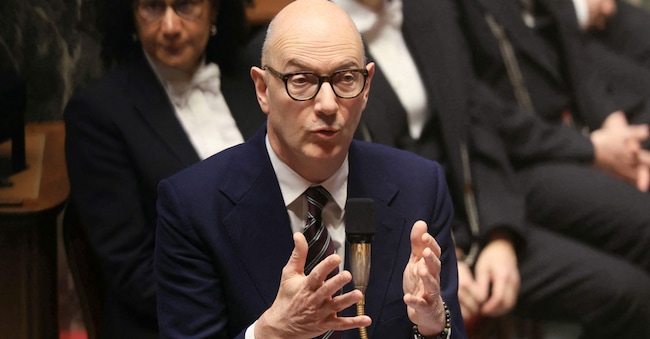
BRUSSELS - France is in the front line in these last days of the year in Brussels. On two fronts, it could prove to be the needle of the scales. The first is that relating to the use of Russian assets. The second concerns the signing of the trade agreement with Mercosur. More generally, interviewed by some European newspapers, including Il Sole24Ore, Finance Minister Roland Lescure, 59, noted that French economic growth is 'resilient' and that the country is 'learning to build compromises'.
"This year," the minister explains, "we should register a growth in gross domestic product of at least 0.8 per cent, maybe even a little more - compared to the expected 0.7 per cent. The budget deficit will be 5.4 per cent of GDP, as expected. We will therefore be in line with the targets. We have shown our partners, the European Commission and the markets that we are able to monitor and manage the budget deficit to ensure that we meet our commitments'.
Public finance and Russian assets
However, next year's budget still has to be approved. The Lecornu government's goal is to record a deficit of 4.7% of GDP in 2026. This will not be easy: 'After the vote on the social security budget (on 9 December in the National Assembly, ed.), we are probably now closer to a 5% deficit. This means that the state budget will have to be strict to ensure that next year we remain globally below or close to 5% of GDP'.
To ensure this, the draft budget of the Ministry of Finance envisages two-thirds spending cuts and one-third tax increases. The choices are now in the hands of parliament. There is no shortage of knots, especially since Paris wants to significantly increase defence spending. Roland Lescure wants to be cautiously optimistic, and on this occasion confirms the goal of reducing the deficit to below 3.0% of GDP by 2029, despite the suspension of the pension reform.
On the various European fronts still open, Paris could turn out to be the needle of the scales. These days, the Twenty-Seven are discussing using the Russian assets frozen at the time of the invasion of Ukraine to support Kiev. Is he confident of finding an understanding between the member countries? "I am confident because where there is a will, there is also a way (...) I have no doubt that we will find a financially, legally and technically sound solution."


