
‘The future of the salesperson lies in providing advice’
The challenge facing showroom staff: explaining to customers why a high-quality Italian product may well cost more than an imported alternative

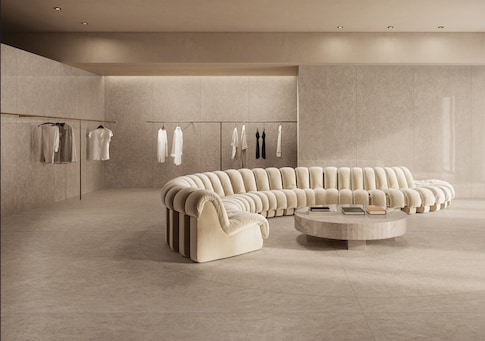
At this year’s Cersaie, you won’t just learn how to lay a tile. You’ll also learn how to sell it more effectively, by explaining why an Italian product might cost more than an imported alternative. This is one of the key themes of Cersaie 2026, taking place in Bologna from 21 to 25 September: training takes centre stage at the fair and has one of its workshops in the ‘Città della Posa’ (Tiling City) in Hall 19.
The topic has already sparked interest among industry professionals: the training sessions for showroom sales staff have been fully booked, prompting the organisers to add an extra session.
With one month to go before the event, there were 400 registrations. Behind those figures lies an economic issue affecting the entire supply chain. “These days, showrooms are struggling to promote Italian products, both in terms of price and quality,” explains Veronica Verona, director and founder of the Accademia dello Showroom. Active for over fifteen years, the academy provides consultancy and training for manufacturers and distributors of building finishes; and for Cersaie, it has developed a two-hour course on consultative selling. Customers are not necessarily looking for the lowest price: they need to understand why they should spend more. “People don’t just want to save money: they want to understand what justifies a higher price,” observes Verona.
This is where neuromarketing and cognitive biases come in, to make highly technical products easier to understand. Otherwise, terms such as ‘rectified ceramic’, ‘shade variation’ or ‘total body’ risk remaining nothing more than catalogue jargon. ‘The aim is not to manipulate the choice, but to make it simpler and more informed.’
Data from the Academy’s National Observatory on the Showroom Experience highlight the urgency of the situation. Twelve mystery shoppers monitor the consumer journey in Italia right through to the follow-up. The average conversion rate is 40 per cent: four out of ten quotes result in orders. The question about budget is asked just once in ten cases. “People often confuse spending power with spending intention,” Verona points out.

