
Negotiations break down; tariff war between the United States and Canada
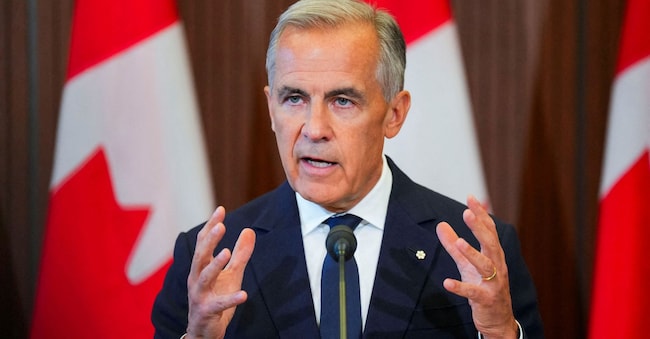
The new 50 per cent tariffs affecting $20 billion worth of Canadian goods have already come into force. Canadian Prime Minister Carney said: “They were asking for too much and offering too little; now we will retaliate dollar for dollar.”
From New York Luca Veronese
 Aggiungi Il Sole 24 Ore
ai preferiti su Google
Tariff negotiations between the United States and Canada came to an abrupt halt on Friday night: the deal announced by Donald Trump as ‘imminent’ has fallen through, and there is now a risk of a full-blown trade war. The new 50 per cent US tariffs immediately affect around $20 billion’s worth of Canadian goods, equivalent to approximately 5 per cent of Canada’s exports to the US. They apply to building materials, plastics, spirits, dairy products, furniture, household appliances, clothing, fishing rods and ice hockey sticks. And they come on top of the measures that have been targeting steel, aluminium, timber and cars for months.
Canada’s response
In response, Mark Carney’s Canadian government has announced that it will introduce new tariffs on goods imported from the United States, with effect from 8 September: ‘Canada,’ said the Prime Minister from Ottawa, ‘will respond to Washington’s new tariffs dollar for dollar, in order to protect Canadian workers, farmers, families and businesses.’ The Canadian tariffs (the details of which will be clarified in the coming days) will target imports from the US of steel, dairy products, household appliances, agricultural machinery, pulp and paper, and electronics.
Trump’s move and Carney’s response have set in motion a dangerous escalation in the clash between two long-standing allies, whose agricultural, automotive and energy sectors are highly integrated. Last year, they recorded bilateral trade of nearly 900 billion dollars. The renewal of the USMCA – the North American free trade agreement that also involves Mexico – is also becoming considerably more complicated.
The escalation
“I have decided to suspend negotiations with the US and have told our negotiators to return home,” said Carney. “The last-minute changes to the terms proposed by the United States were unfair, economically disadvantageous and called into question the reliability of any agreement,” said the Canadian Prime Minister, accusing the US of changing the rules of the game. “In short,” he added, “the US was asking for too much and offering too little.”
Carney is standing up to the United States – as perhaps only China has done – in accordance with the mandate he has received from his government: in last year’s election and in recent opinion polls, Canadians have said they are opposed to giving in to Trump’s pressure, even if it means suffering economic damage.


