
Transplants

Samaritan donates a kidney to a woman and saves her life: the tenth time in Italy

It happened in Padua with a living donation to the National Transplantation Network: the last case a year ago. The people today are in excellent condition

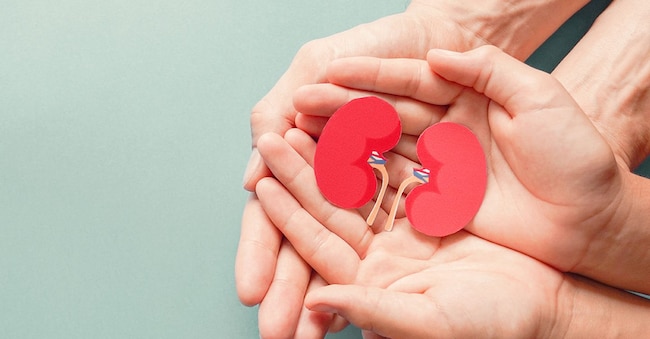
Adult and child holding kidney shaped paper on textured blue background, world kidney day, National Organ Donor Day, charity donation concept

3' min read

Translated by AI
Versione italiana

3' min read

Translated by AI
Versione italiana

It is called a 'Samaritan donation' and is the procedure whereby a person in perfect health voluntarily chooses to undergo the removal of a kidney in order to offer it anonymously, free of charge, and non-directly, not to a family member but to an unknown recipient. This happened in Padua, where a man donated one of his kidneys to the National Transplantation Network, saving the life of a woman unknown to him, who was already on the waiting list to receive a transplant.


Loading...

The last donation of this kind in Italy was exactly a year ago and also took place in Padua. Since 2015, when the National Transplant Centre activated this specific programme with the green light from the Higher Health Council, a total of ten Samaritan donations have been recorded.


The donation and transplant procedure was carried out a few weeks ago, in the space of a single day, by the team led by Professor Lucrezia Furian, director of the Padua Transplant Centre. Donor and recipient were discharged as planned within a few days and today both are in excellent condition.


The Donor Path

The Samaritan donor, who was followed throughout his journey by the Kidney-Pancreas Transplant Centre at Padua Hospital, underwent a rigorous clinical, immunological and psychological procedure before being admitted to the programme. As required by national protocol, two third-party commissions - one regional and one national - examined the candidature in detail. The final go-ahead came from the territorially competent court, which authorised the withdrawal after verifying the full freedom, gratuitousness and awareness of the choice. 'The harvesting procedure,' explains the National Transplant Centre, 'involves no particular risks and those who undergo it can return to a perfectly normal life.


After the magistrate's authorisation, the National Transplant Centre, headed by Giuseppe Feltrin, accepted the kidney donation. In this case, it was not possible to identify an incompatible donor-recipient couple to start a chain of cross transplants, as in previous cases; therefore, the organ was assigned according to the ordinary protocol to the first eligible patient on the waiting list at the Padua Transplant Centre.


Ten years of donations and thirty transplants performed


This latest donation brings to ten the number of Samaritan donors who have made this choice in Italy since 2015. In total, Samaritan donations have made 30 kidney transplants possible, involving, in addition to the 10 donors, 21 donor-recipient pairs. "Every donated organ is received by the Transplantation Network with responsibility and gratitude, and this becomes even more true when this gesture comes from a Samaritan donor," comments CNT Director General Giuseppe Feltrin. "We are grateful to this person for his generous decision, and we are sure that in front of his story many will reflect on the inestimable value of organ donation. Samaritan donations are certainly unusual, but donation after death is a choice within everyone's reach: today, with 8,000 people waiting for transplants, giving one's consent to donate is more fundamental than ever'.

Donor: "I was enlightened by the Gospel"

The donor recounted the reasons for his choice. 'Listening to the Gospel in church, in one of the passages about St John the Baptist,' he said by telephone during the press conference presenting the intervention, 'I had a sort of epiphany, and I thought: what if the robes of which the Baptist speaks were in my case the kidneys?' The idea, in fact, was also born 'when I made my last blood donation, which I was no longer able to do due to age limits. Having lived through the experience of my brother-in-law who died before a viable liver arrived, I developed the idea of becoming a Samaritan donor'.

Copyright reserved ©
Loading...

Brand connect

Loading...

Newsletter

Notizie e approfondimenti sugli avvenimenti politici, economici e finanziari.

Iscriviti