

Sanofi: for every euro invested in research, three euros are generated for the community
The 2024 Impact Report with Kpmg presented: total contribution of 505 million and two jobs created for every employee hired
Key points
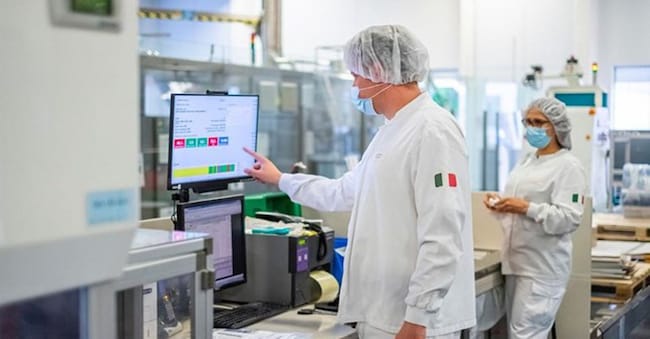
In Abruzzo, on the outskirts of L'Aquila, there is an innovative bio-pharmaceutical production hub where hi-tech is integrated with artificial intelligence and the skills of the future are intertwined with immunological vocation. The French multinational Sanofi has created it, demonstrating that it is possible to accelerate access to transformative therapies, while generating skilled employment and greater competitiveness for the country. This is confirmed by the data of the 2024 Impact Report, produced in collaboration with Kpmg Italia and presented at the meeting 'The impact of pharmaceutical innovation for the competitiveness and growth of the country: Sanofi's excellence in Scoppito'.
The impact on the economy and employment
On the economic front, the study shows that in 2024 alone, the company's overall contribution (direct, indirect and induced) to the national economy amounted to 505 million euro, equal to 0.02% of GDP. Moreover, Sanofi's activities have activated 4,184 jobs, of which 1,446 direct, 2,150 along the entire supply chain and 588 in the induced sector. This means that for every employee employed by Sanofi, there is a multiplier effect of about 2 more people employed in our country.
"According to the Report,' emphasises Marcello Cattani, President and CEO of Sanofi Italy and Malta, 'for every 1 euro we invest in research, manufacturing excellence and skills, we generate almost 3 euros of overall benefit for the community. Our commitment to innovation therefore translates into growth and health, into collective wellbeing and value for the Italian system and the whole of Europe.
On the strictly health front, in 2024 Sanofi reached 15 million patients in Italy, with €45.2 million invested in research and development, generating an overall impact of €133 million for the national health system. 'Our key solutions have enabled us to avoid significant costs,' Cattani continues: €29.5 million thanks to the immunisation campaign against the Respiratory Syncytial Virus, €20.8 million for type 2 inflammatory diseases and €34 million for cardiovascular diseases.
Over 81 thousand hours provided for training
The focus on personnel is also central, with EUR 1.6 million invested in training, with more than 81,000 hours provided 'to strengthen the skills and support the continuous growth of those who work with us'. And also on sustainability: at the Scoppito and Anagni production sites, EUR 21.9 million have been invested in 2024 with initiatives aimed at reducing CO₂ emissions (more than 30% less than in 2019), producing a saving of EUR 1.9 million to the benefit of the environment and the community. In addition, a 100,000 square metre photovoltaic plant will be operational from the beginning of 2026, designed to provide renewable energy to the Anagni plant.

