The complaint

Save the Children: in Lebanon, more than seven children a day have been killed or injured over the past six months

There have been 1,300 child victims of the latest Israeli escalation, of whom at least 257 have lost their lives. Up to 100,000 may not return to school

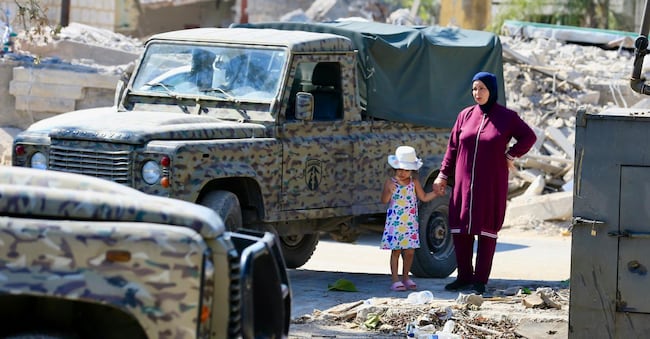
Una donna e una bambina in piedi accanto a veicoli militari libanesi a Zawtar al-Gharbiya, nel sud del Libano, il 5 agosto 2026. Zawtar al-Gharbiya è una delle zone pilota designate nell’ambito dell’accordo di cessate il fuoco tra Libano e Israele, dalla quale le forze israeliane si sono ritirate.   (EPA/Stringer)

3' min read

Translated by AI
Versione italiana

3' min read

Translated by AI
Versione italiana

Almost 1,300 children were killed or injured – more than seven children a day, on average – in the six months following Israel’s largest escalation in Lebanon in recent decades. This is according to Save the Children, the organisation that has been working for over 100 years to save boys and girls at risk around the world and secure a future for them.

Libano, raid israeliano su infrastrutture di Hezbollah: il video dell'IDF

At its height, the Israeli offensive led to the displacement of over a million people, many of whom have still not been able to return to their homes. Despite the so-called ceasefire in June – according to a statement – for children in Lebanon, the emergency is far from over. Around 348,800 people are still displaced within the country, with no idea if or when they will be able to return to their homes and rebuild their futures.

Loading...

More than 4,300 people have died, including 257 children

Since 2 March, at least 4,348 people have been killed and 12,300 wounded in air strikes carried out by Israeli forces.

The victims include at least 257 children killed and 1,039 injured.

The figures include at least 355 people killed in Israeli air raids following the announcement of the ceasefire on 19 June, according to data from the Ministry of Public Health.

The latest victim was a child who died on Monday as a result of the explosion of a cluster bomb left on the ground following Israeli attacks in southern Lebanon.

In Libano in coda per fuggire dal Sud dopo nuovi attacchi Israele

In southern Lebanon, the epicentre of the displacement crisis, the inhabitants of some 55 villages situated along the border continue to face restrictions on access to their own communities due to ongoing Israeli military operations, the statement continues. Many of these people have witnessed the destruction of their villages and homes. For families who have returned to their villages, a return to normality remains a distant prospect. Many have found their homes and infrastructure destroyed or damaged, whilst children continue to have limited access to essential services, including schools and hospitals.

One hundred thousand children out of school

At least 100,000 children are at risk of missing the next school year unless urgent action is taken to restore the Lebanese education system. Over the past six months, according to a national survey conducted by the Ministry of Education and Higher Education, 340 schools have been damaged or destroyed.

Damage to water infrastructure has affected more than 700,000 people in southern Lebanon, whilst over 41,000 homes in the same region have been damaged or destroyed. “It is heartbreaking to see children and young people continuing to suffer whilst still living in a state of uncertainty, abandoned to their fate by the international community,” said Nora Ingdal, director of Save the Children in Lebanon.

“In my meetings with the children, sadness and pain come across very strongly in their accounts of their experiences. They deeply miss their homes, their friends and the everyday life they have lost; displacement deprives them of the chance to regain stability and rebuild their lives,” continued the Lebanese director.

Loading...

Living under constant threat

“Displaced families must be able to return to their homes safely and with dignity. They should not be forced to choose between indefinite displacement and returning to communities where their homes have been destroyed, essential services are unavailable or their safety cannot be guaranteed,” he emphasised. “Lebanon needs a definitive, lasting and comprehensive ceasefire. Children cannot continue to live under the constant threat of further violence whilst they wait for the conditions necessary to rebuild their future. The longer the conflict continues and the longer they remain out of school, the greater the risk that many of them will be unable to resume their education.”

“All parties involved in the conflict must comply with their obligations under international humanitarian law, including the protection of children and other civilians, civilian infrastructure and humanitarian personnel. The international community must not allow children in Lebanon to grow up in an environment marked by recurrent attacks, prolonged displacement, obstacles to returning to their communities and the destruction of essential services,” concluded Ingdal.

Save the Children is calling for recovery and reconstruction efforts to prioritise children’s needs, ensuring that schools, healthcare facilities, water networks and other essential services are rebuilt in a safe, accessible and inclusive manner, including for children with disabilities and those facing additional forms of vulnerability.

Save the Children has been working in Lebanon since 1953. In collaboration with local partners and authorities. The organisation distributes essential supplies in hard-to-reach areas in the south of the country, provides psychosocial support to children, raises awareness amongst families and children about the risks posed by unexploded ordnance, ensures access to safe drinking water and sanitation facilities, and distributes essential supplies to displaced people.

Copyright reserved ©
Loading...

Brand connect

Loading...

Newsletter

Notizie e approfondimenti sugli avvenimenti politici, economici e finanziari.

Iscriviti